
Publisher: Instytut Europy Środkowej
ISSN: 2657-6996
  • Sławomir Poleszak
  • Agnieszka Zajdel
  • Szczepan Czarnecki
  • Spasimir Domaradzki
  • Łukasz Krzyżanowski
  • Sławomir Łukasiewicz
  • Damian Szacawa
  • Agata Tatarenko

IEŚ Commentaries

Visegrad Team

IEŚ Commentaries 443
9 September 2021
Dominik Héjj - Visegrad Team

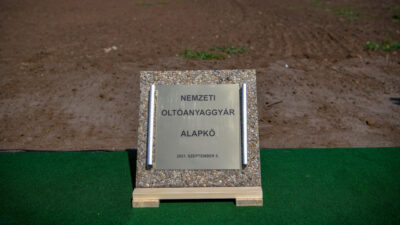
The Hungarian national medicine factory will produce Russian Sputnik V and Chinese Sinopharm

On Monday, September 6, 2021, the groundbreaking ceremony for the national drug factory (nemzeti oltóanyaggyár) in Debrecen took place. The factory is to be launched next year and is also to produce vaccines against COVID-19, including the Russian Sputnik V and Chinese Sinopharm vaccines. The investment is expected to increase Hungary’s security in the face of the current...

More →
Baltic Team, Visegrad Team

Komentarze IEŚ 436
31 August 2021
Łukasz Lewkowicz - Baltic Team, Visegrad Team

The Three Seas Initiative ahead of the Riga Summit: politically inspired, commercially driven

Next year’s Seventh Summit of the Three Seas Initiative (TSI) will be held in Riga. In light of the main challenge facing TSI, which is finding financing for priority projects in the region, President Egils Levits announced that Latvia plans to focus on raising private capital to improve transportation, energy, and digital infrastructure in this part of Europe. A kind of...

More →

Balkan Team, Visegrad Team

IEŚ Commentaries 413
25 June 2021
Marlena Gołębiowska - Balkan Team, Visegrad Team

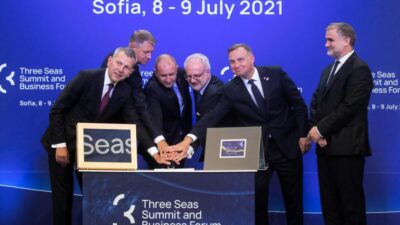
Before the summit in Sofia: challenges facing the Three Seas Initiative

On July 8-9, 2021, Bulgaria will hold the sixth summit of The Three Seas Initiative (TSI). The meeting in Sofia will be an opportunity to summarize the achievements so far, but also to discuss the challenges facing the Initiative, which include, inter alia, real and potential conflicts, the slow pace of implementation of priority projects, the return of the countries of this...

More →

Visegrad Team

IEŚ Commentaries 381
28 April 2021
Łukasz Lewkowicz - Visegrad Team

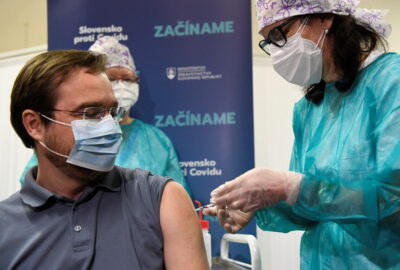
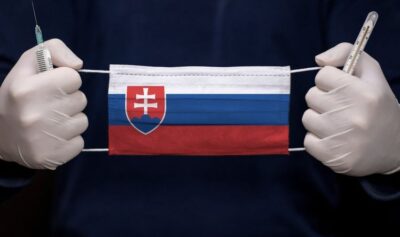
Slovakia: The approach to the Sputnik V vaccine divides society

The purchase of the Sputnik V vaccine by the Prime Minister of Slovakia, Igor Matovič (OĽaNO), and the resulting government crisis has caused a clear division in Slovak society. Public opinion polls have shown very high approval for the use of the Russian vaccine, while at the same time scepticism about the AstraZeneca vaccine. On the other hand, a poll conducted after the...

More →

Visegrad Team

IEŚ Commentaries 348
9 March 2021
Agata Tatarenko - Visegrad Team

Romania: 30 years of demographic decline

Romania is struggling with a demographic decline that has been going on for many years. Eurostat research shows that Romanians are among the youngest in Europe when they have their first child. However, this does not affect significantly the number of babies born each year. The reason for the difficult demographic situation in Romania is mass emigration, mainly to Western...

More →

Visegrad Team

IEŚ Commentaries 347
5 March 2021
Łukasz Lewkowicz - Visegrad Team

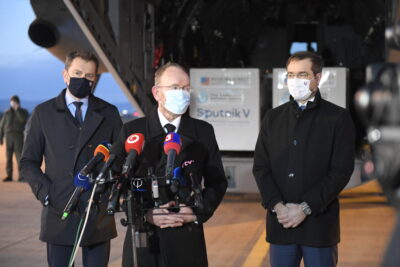
Slovakia: Political Crisis with Sputnik V in the Background

Slovakia has officially become the second EU country to approve the use of Sputnik V. According to the adopted plan, 2 million doses will be delivered to the country in the coming months. The decision was made by the prime minister, and the minister of health did not consult with the full government, which caused a serious political crisis within the government coalition. Indeed,...

More →

Visegrad Team

IEŚ Commentaries 311
19 January 2021
Łukasz Lewkowicz - Visegrad Team

The automotive industry in Slovakia has overshadowed by the COVID-19 Pandemic

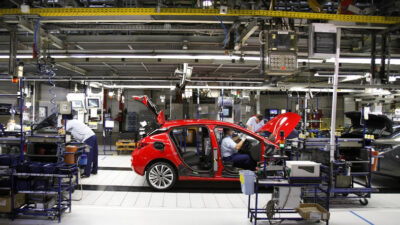
The automotive industry is a key industrial sector in Slovakia. It is also the main source of direct foreign investment in the country. The situation in the automotive industry during the first wave of the COVID-19 pandemic, when automotive manufacturers suspended car production, had a significant impact on the Slovak economy. On the other hand, the lockdown introduced by the...

More →

Visegrad Team

IEŚ Commentaries 298
8 December 2020
Dominik Héjj - Visegrad Team

The Hungarian government amends the Fundamental Law for the ninth time

On November 10, 2020, a draft amendment to the Hungarian Constitution was submitted. Justice Minister Judit Varga submitted the bill with significant but politically controversial changes to the Constitution to be processed while Hungary struggles with the COVID-19 pandemic and the state of danger (article no 53 in Fundamental Law) being reintroduced. State of danger again. Due to...

More →

Visegrad Team

IEŚ Commentaries 292
27 November 2020
Dominik Héjj - Visegrad Team

Hungarian veto EU budget – belief or strategy?

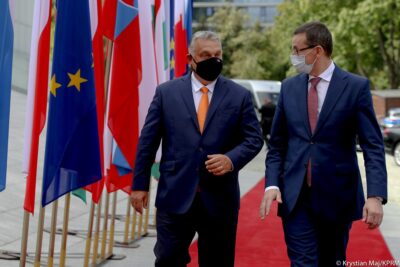
On November 8, Viktor Orbán sent a letter to the leaders of Germany, Slovenia, and Portugal, as well as to the President of the European Commission and the President of the European Council, informing them that if the EU budget and the Next Generation EU fund, dealing with the rule of law, where would be a Hungarian veto. A few days, later this veto was formalized during the...

More →

Visegrad Team

Commentaries IEŚ 278
4 November 2020
Łukasz Lewkowicz - Visegrad Team

State of emergency and mass testing: the second wave of the pandemic in Slovakia

On October 1, the Slovak authorities introduced a state of emergency for the second time. This step was taken due to the rapid increase in the number of people infected with the SARS-CoV-2 virus. Further restrictions were implemented, concerning, inter alia, quarantines, organizing mass events, and a number of restrictions in schools and universities. On October 23, Slovakia began...

More →

Visegrad Team

IEŚ Commentaries 273
12 October 2020
Marlena Gołębiowska - Visegrad Team

The impact of COVID-19 on the fiscal policies of the Central European countries

Within six months of the announcement of the COVID-19 pandemic, the Central European countries spent nearly 10% of GDP on fiscal support. This decisive response by governments is mitigating the effects of the economic crisis, saving companies and preserving jobs. However, an increase in expenditure with lower budgetary revenues inevitably leads to a deterioration in the...

More →

Visegrad Team

IEŚ Commentaries 253
10 October 2020
Agata Tatarenko - Visegrad Team

(Dis)unity of the Visegrad Group countries in the face of the crisis in Belarus

The presidential elections in Belarus and the post-election protests have raised a discussion in Central European countries. The Belarusian issue was debated during the meetings of the Visegrad Group, including the V4 summit organized on September 11, 2020 in Lublin. The Belarusian issue highlighted certain differences within the Visegrad Group. However, there is still no...

More →

Visegrad Team

IEŚ Commentaries 227
30 July 2020
Łukasz Lewkowicz - Visegrad Team

“Back on track”: the Polish Presidency of the Visegrad Group in the shadow of a pandemic (Łukasz Lewkowicz)

On July 1, Poland took over the annual presidency of the Visegrad Group (V4) for the sixth time. In the program of the new presidency, the emphasis was placed on taking joint actions to return to economic and social normality. The most important element of the functioning of the V4 in the coming year is to stimulate the economy weakened by the pandemic. The tasks of particular...

More →

Visegrad Team

IEŚ Commentaries 211
24 June 2020
Łukasz Lewkowicz - Visegrad Team

“We didn’t write the past, the future is in our hands”: a new Slovak-Hungarian opening in the shadow of Trianon (Łukasz Lewkowicz)

June 4th marks 100 since the treaty was signed in Trianon, which resulted in the loss of a significant part of Hungary’s territory and population and in Slovakia being proclaimed as part of the newly created Czechoslovakia. In early June, Slovak Foreign Minister Ivan Korčok and Prime Minister Igor Matovič paid official visits to Budapest. Both politicians declare a new opening...

More →

Visegrad Team

IEŚ Commentaries 195
16 June 2020
Agata Tatarenko - Visegrad Team

Another tension in Romanian-Hungarian relations (Agata Tatarenko)

At the end of April 2020, the Romanian Parliament dealt with a bill aimed at establishing an autonomous region covering areas inhabited by the Hungarian-speaking ethnic group Székelys. The bill was rejected by the senate, however, the initiative caused a number of controversies on the political scene in Romania, including, above all, the statement of President Klaus Iohannis. The...

More →

Visegrad Team

Komentarze IEŚ 194
31 May 2020
Marlena Gołębiowska - Visegrad Team

State-owned enterprises in the Central and Eastern Europe in the age of the COVID-19 pandemic (Marlena Gołębiowska)

Economic crises usually mean a return to state interventionism and a more active role for the state as owner. It is no different today. The COVID-19 pandemic reopens the debate on state-owned enterprises. Due to the history of economic ownership, it has particular resonance in the countries of Central and Eastern Europe. Especially that in the region is increasingly announcing the...

More →

Visegrad Team

Komentarze IEŚ 184
14 May 2020
Łukasz Lewkowicz - Visegrad Team

New Foreign Policy of Slovakia: Strengthening Transatlantic Orientation and Active Regional Cooperation (Łukasz Lewkowicz)

On April 19 Slovakian Prime Minister Igor Matovič presented the government’s program for 2020-2024, which was subsequently adopted by the National Council of the Slovak Republic on April 30. The anti-corruption activities, the reform of the justice system, and the pro-social policy constitute the central pillars of the new document. In the field of foreign policy, a clear...

More →

Visegrad Team

Komentarze IEŚ 14
7 May 2020
Agata Tatarenko - Visegrad Team

“Magna Hungaria” and “the Treaty of Trianon” in the Hungarian politics of memory: an outline of the issue (Agata Tatarenko)

“Magna Hungaria” and “the Treaty of Trianon” are two of several fundamental terms featured in the Hungarian politics of memory. Owing to a strong position they occupy in the cultural memory of Hungarians, they are a flexible substance for Fidesz and Viktor Orbán to base their actions upon and subordinate these to their present political objectives. These encompass e.g....

More →

Visegrad Team

Komentarze IEŚ 166
14 April 2020
clivio - Visegrad Team

Removal of the Statue of Marshal Ivan Konev in Prague: a crisis in Czech-Russian relations (Agata Tatarenko)

After several years of dispute, the authorities of Prague 6 removed the monument of Marshal Ivan Konev from the public space. The statue is to be sent to the not-yet-existent Museum of Memory of the 20th century. The conflict over the memorial related to the history of World War II indicates a deepening crisis in Czech-Russian reactions, in which Prague’s local government is...

More →

Visegrad Team

Komentarze IEŚ 162
8 April 2020
Marlena Gołębiowska - Visegrad Team

COVID-19 and the digitalization of Central Europe (Marlena Gołębiowska)

The COVID-19 pandemic outbreak has become a global stress test. The restrictions of social distancing have led the world to accelerated “lessons” in the areas of communication, digital skills, online activities, information technology for businesses and digital public services. Paradoxically, this could be a turning point in the digital transformation of the Central European...

More →

Visegrad Team

Komentarze IEŚ 157
6 April 2020
Szczepan Czarnecki - Visegrad Team

COVID-19 Pandemic in Czechia, Hungary and Slovakia (Szczepan Czarnecki, Dominik Héjj, Łukasz Lewkowicz, Agata Tatarenko)

The COVID-19 pandemic forced the authorities of Czechia, Hungary and Slovakia to adopt a number of similar solutions such as strict lockdown or closing the borders. Decisive steps to limit and slow down the spread of COVID-19 have been undertaken in these countries earlier than in Western Europe. Each authorities have prepared an assistance package for domestic economies. At the...

More →

Visegrad Team

Komentarze IEŚ 155
2 April 2020
Andrzej Szabaciuk - Visegrad Team

The Importance of Establishing a Consultative Council in Minsk from the Point of View of Settling the Conflict in Eastern Ukraine (Andrzej Szabaciuk)

On 11 March in Minsk, the Tripartite Contact Group on a peaceful settlement of the conflict in the Donbas (TCG) signed an agreement about the establishment of the Consultative Council: an advisory body in which representatives of Ukraine and the separatist republics should deal with the political aspects of the Ukrainian crisis. Information about the new Minsk agreement caused...

More →