Estonia launched Eesti.ai in 2026 – a programme in which the adoption of artificial intelligence is treated as an instrument of economic policy. The declared goal is ambitious: to double labour productivity by 2035 and increase GDP by 50% within ten years. The approved pool of fifteen flagship projects operationalises this ambition, while at the same time opening up a number of...
More →The decision to suspend the deployment of a rotational contingent of the United States Armed Forces to Poland has brought to light structural deficiencies in bilateral relations. The uncertainty generated by this decision merely exemplifies the broader challenges inherent in the asymmetrical Polish-American partnership. Improving the condition of these relations requires Polish...
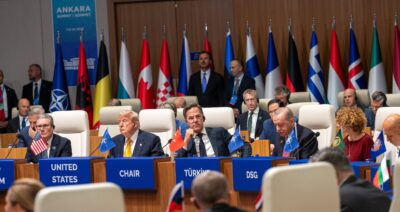
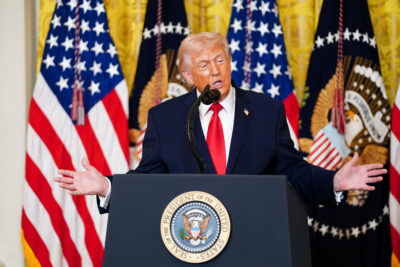
More →Since 14 March 2026, Donald Trump has been urging European NATO allies to engage in efforts to restore freedom of navigation through the Strait of Hormuz. The coercive tone employed by the President of the United States in his appeal to NATO member states, coupled with the unequivocal rejection of his proposal by European leaders, constitutes yet another manifestation of tensions...
More →The armed conflict between the United States, Israel, and Iran—encompassing both strikes on targets inside Iran and Iranian retaliatory attacks on energy infrastructure in the Persian Gulf—together with the effective suspension of maritime traffic through the Strait of Hormuz, has triggered the most severe shock to global energy markets since Russia’s invasion of Ukraine in...
More →The Druzhba pipeline constitutes a critical component of Central Europe’s energy infrastructure, supplying Russian crude oil to refineries in Slovakia and Hungary. Following the suspension of deliveries through the southern branch on 27 January 2026, both countries found themselves facing a serious threat to energy security, as they remain among the last EU member states still...
More →On 5 February 2026, the Treaty on Measures for the Further Reduction and Limitation of Strategic Offensive Arms (New START), concluded in 2010 by the United States and Russia, expired. Although the treaty did not cover the systems used by Russia for nuclear coercion against the states of Central and Eastern Europe (CEE), its termination has global implications and therefore...
More →On 30 January 2026, the Ministers of Defence of Lithuania, Latvia, and Estonia signed a Declaration of Intent on the establishment of the Baltic Military Mobility Area (BMMA). The objective is to streamline procedures and facilitate the expeditious movement of troops and equipment across the three nations, particularly in crisis situations. The initiative aims to increase the...
More →The year 2025 proved to be a breakthrough year for Moldova in terms of energy security, yet it was also exceptionally challenging due to rising electricity prices. Following the suspension of natural gas deliveries to the MGRES power plant (located in Transnistria) via Ukrainian territory – a facility that for many years served as a pillar of the national power system –...
More →Since the 2020 presidential election, Belarusian opposition leader Sviatlana Tsikhanouskaya has resided in Lithuania due to fears of political repression in Belarus. In mid-January 2026, she announced that she and her office would relocate to Warsaw. The main reason for this decision was the Lithuanian authorities’ decision to downgrade Tsikhanouskaya’s protective status,...
More →