Lublin Forum 2026 is a platform for debate and exchange of experience, bringing together experts, analysts, representatives of academia, public administration, media, and international organizations from Poland and abroad. The diverse perspectives, knowledge, and experience of the participants will provide the foundation for discussions on the most important challenges related to...
Centered on the theme ‘Russian Aggression: Roots and Forms,’ the Lublin Forum 2026 is proud to collaborate with media partners who play a vital role in promoting the event and its outcomes. Udostępnij
We are honored to invite you to the Lublin Forum 2026, held at the Lublin Conference Center on May 19–20, 2026. This year’s edition, titled “Russian Aggression: Roots and Forms,” will combine historical and political science perspectives, enabling experts, researchers, and practitioners to analyze the long-term continuity of Russian imperialism, its historical...
This panel will analyse the relationships between the states of Central and Eastern Europe and the Global South in the context of the advancing multipolarisation of the international system. The growing agency of non-European actors, the erosion of Western dominance, and intensifying great-power rivalry are reshaping the strategic environment in which the states of the...
Contemporary Russian imperialism is based not only on military and economic instruments but also largely on cultural conditions that oppose progressivism and liberal modernity. It is founded on conservative counter-revolution and anti-modernism, which contribute to the destabilisation of the liberal-democratic order and are one of the key factors in the geopolitical failures of...
EU and NATO enlargement has become a key arena for geopolitical rivalry between the Euro-Atlantic institutions and Russia. Yet it is not only a story of great-power competition; the process is also shaped by the strategic agency of candidate and aspiring states, including Ukraine, Moldova, Georgia, Armenia, and the Western Balkans. This panel asks whether...
This panel examines the Baltic Sea and Black Sea basins, as well as the Arctic, as arenas of NATO and EU strategic competition with Russia, where regional actors (Baltic and Nordic countries, Poland, Bulgaria, Romania) are developing their own maritime security doctrines and implementing EU and NATO strategic frameworks. Regional states are not merely passive objects of...
This panel brings together scholars and practitioners to examine the expanding role of non-physical forms of aggression in international relations, with particular emphasis on cognitive warfare. In this context, narratives become strategic instruments aimed at shaping perceptions, influencing political behaviour and undermining social cohesion. Building directly on the themes...
Societies of Central and Eastern Europe, a region described by Kroutvor as an “anecdote” of European modernity, situated between the experience of subordination and the necessity of constantly explaining itself, have, since the collapse of the USSR, sought to construct independent narratives about their own past, particularly with regard to the period after 1945. Within...
This panel offers a comprehensive overview of regional imaginations, attitudes, and political responses toward Russia, with attention focused on the impact of Russia’s aggression against Ukraine. It aims to examine how selected countries of East-Central Europe perceive Russia today and how these perceptions are shaped by historical memory, geopolitical experience, and...
The panel explores Russian and Soviet policy toward East-Central Europe through the lens of history and epistemic violence, from the medieval appropriation of the legacy of Kyivan Rus to contemporary Russian politics of history. It focuses on how imperial knowledge, political discourses, and historical narratives have been used to legitimise domination, deny the...
On 19–20 May 2026, Lublin will host the next edition of the Lublin Forum—an international event devoted to the key political, economic, and social challenges facing Central and Eastern Europe and its wider neighbourhood. This year’s edition, titled Russian Aggression: Roots and Forms, will bring together historical and political science perspectives, offering...
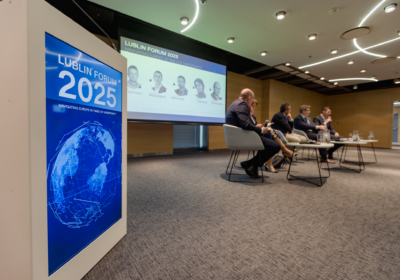
The Lublin Forum 2025, held on June 9-10, 2025, at the Lublin Conference Center, served as a vital platform for exchanging knowledge and experiences among experts, policymakers, and participants. Discussions focused on security, international cooperation, and Central European challenges. The program included an opening session featuring Dr. hab. Mirosław Filipowicz, Director of...
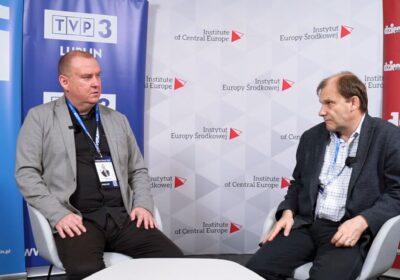
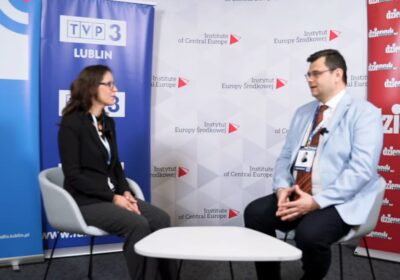
In a conversation held during the Lublin Forum 2025, dr Łukasz Lewkowicz from the Institute of Central Europe talks with dr Juraj Marušiak from the Institute of Political Science of the Slovak Academy of Sciences about the eastern policy of Robert Fico’s government in Slovakia. The discussion covers Slovakia’s relations with Russia and Ukraine, as well as the geopolitical...
There is a strong media and political struggle between opposition leader Peter Magyar/TISZA party and Orban/Fidesz-KDNP (Kereszténydemokrata Néppárt) coalition. What is the secret of Magyar’s success who is the former beneficiary of Fidesz’s National Cooperation System (Nemzeti Együttműködés Rendszere)? What is the future of democracy in Hungary? Whether it would...
Lublin Forum 2025 has come to an end, but the emotions and valuable conversations will stay with us for a long time. Over the course of two intense days, forum participants — experts, decision-makers, institutional representatives, and guests interested in security and international cooperation — exchanged knowledge, experiences, and insights on the key challenges facing...
Lublin Forum 2025: Navigating Europe in Times of Uncertainty is a two day event filled with intensive debates, inspiring talks, and expert analyses focused on the key challenges facing Central and Eastern Europe. In Lublin, you’ll meet renowned analysts, practitioners, academics, and government representatives from Poland and abroad. Check out what we’ve prepared – and plan...
During Lublin Forum 2025, a series of discussion panels will focus on the most pressing challenges facing Central and Eastern Europe. Experts, researchers, and practitioners from Poland and abroad will explore key topics vital to the region’s future, including EU enlargement policy, regional security, the state of democracy, and the role of minorities in democratization...
Lublin Forum 2025 will bring together experts, practitioners, and opinion leaders from Poland and abroad. The speakers will include representatives from academia, media, government, and international organizations. Their knowledge, experience, and diverse perspectives will provide a strong foundation for inspiring debates and insightful analyses. Udostępnij
The team of experts and specialists from the Institute of Central Europe is responsible for organizing Lublin Forum 2025. We oversee program planning, collaborate with partners, and manage all logistical aspects of the event. Additionally, we are available to assist with organizational and media-related matters. Please feel free to contact us: forum@ies.lublin.pl Udostępnij
Lublin Forum 2025: Navigating Europe in Times of Uncertainty is supported by media outlets that help promote the event’s idea. Here are our media patrons. Udostępnij
Join an event that brings together experts and practitioners to discuss the future of Europe. Fill out the form and be part of Lublin Forum 2025: Navigating Europe in Times of Uncertainty. Udostępnij
On June 9–10, 2025, we invite you to the Lublin Conference Center for Lublin Forum 2025: Navigating Europe in Times of Uncertainty — a gathering of experts discussing the key challenges facing Europe today. During the discussion panels, we will explore issues such as European Union enlargement policy, regional security, the state of democracy, and the role of minorities in...
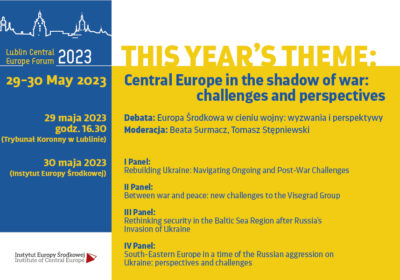
Lublin Central Europe Forum 2023 / 29-30 MAY 2023THIS YEAR’S THEME: Central Europe in the Shadow of War: Challenges and Perspectives 29 May 2023 / Trybunał Koronny w Lublinie / 16.30 Debate: Lublin Triangle: the Power of Regionalism in the Changing Global System In cooperation with the Institute of Political Science and...