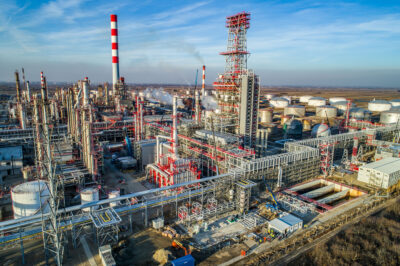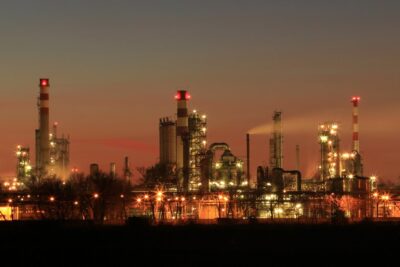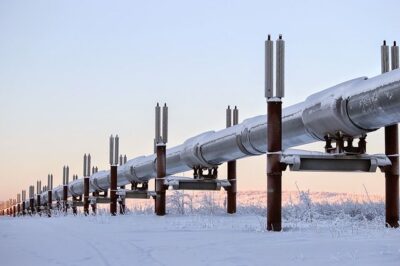
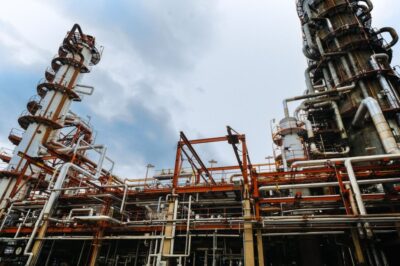
The Russian-Ukrainian war has reoriented the refining sector in the Central European region, including Bulgaria and Romania. The crude oil processing plants operating in these countries had for years imported a large amount of crude oil from the Russian Federation. The change in international conditions has contributed to the activation of efforts to diversify crude oil supply...
More →There have been efforts in Latvia to build an LNG terminal in Skulte since 2016, but recent decisions by the government in Riga make the realisation of the investment uncertain. Even the damage in early October 2023 to the Balticconnector pipeline, which connects the gas system of Estonia and Finland, has not changed the Latvian government’s approach to the Skulte LNG terminal....
More →In Czechia, under the influence of the Russian Federation’s full-scale attack on Ukraine, there has been a change in the operation of energy companies, which are supposed not only to meet business objectives but also to strengthen the state’s energy security. In this context, in the past few months, we have seen the implementation of two acquisitions by companies wholly owned...
More →In Bulgaria, the new government of Prime Minister Nikolai Denkov has ordered an investigation into the 2023 Bulgarian-Turkish agreement, which provides access for Bulgargaz to LNG terminals in Turkey and the Turkish transmission network. According to the government’s position, the agreement between Bulgargaz and BOTAŞ, which was concluded for a period of 13 years, is...
More →The Russian Federation’s armed attack on Ukraine has changed the perception of energy-exporting countries. In the past, Russia played a key role in providing crude oil and natural gas supplies to Central European countries, however, the war has forced countries in the region to seek alternative suppliers. Under these conditions, Azerbaijan has been growing in importance for many...
More →Ukraine’s underground natural gas storage facilities, together with its extensive pipeline network, have played an important role in ensuring the availability of natural gas in Europe over the years. However, the importance of Ukrainian infrastructure was reduced as a result of the systematic reduction of natural gas supplies from east to west following the Russian...
More →For years, Russia has played an important role in supplying liquid fuels by sea to all of Europe, especially diesel fuel, a key product in the transportation industry. The Russian Federation’s armed attack on Ukraine in 2022 led to changes in commodity markets, affecting the volume of liquid fuel imports to the Western Balkan countries. Due to the new market conditions,...
More →Serbia has, for years, been dependent on natural gas supplies from the Russian Federation, and the resulting political influence has had consequences for its energy policy and the presence of Russian capital in key energy companies. In recent months, however, there has been a noticeable modification of the Belgrade government’s position on the importance of Russia in ensuring...
More →For years, Sweden’s low electricity prices have been a direct consequence of the operation of the country’s nuclear and hydroelectric power plants. A stable level of energy demand has made Sweden an energy exporter, but the situation may change over the next several years. Such a situation will require appropriate investment measures. Over the years, negative public attitudes...
More →Croatia is taking active steps to increase its participation in ensuring the energy security of Central European countries. A key tool will be the expansion of the LNG terminal on Krk Island, which is expected to eventually supply natural gas to many countries in the region from alternative sources to Russia. Expansion of the terminal and natural gas pipelines is extremely...
More →Bulgaria is considering a return to the construction of the Burgas-Alexandroupoli pipeline, which would allow greater diversification of crude oil supplies to the Burgas refinery. The project was initiated as early as 1993, at which time it was intended to increase exports of Russian crude oil to international markets. The ongoing Russian-Ukrainian war and sanctions imposed on the...
More →Serbia has been taking active steps for several months to diversify the sources and directions of crude oil supplies to the country’s only operating refinery in Panchevo. Due to sanctions imposed on Russia, the plant is currently unable to import crude oil from that country. However, the government in Belgrade is in favor of building a pipeline linking Serbia and...
More →The entry into force on December 5, 2022 of European Union sanctions against Russia, which prevent the import of crude oil from that country by sea, has forced refiners in Europe, including those in Central Europe, to seek alternative grades, including from Kazakhstan. On one hand refineries in Germany are counting on crude oil supplies from that country, but the direction of...
More →The sixth package of sanctions against Russia introduced by the European Union in connection with the attack on Ukraine will have consequences for Serbian Pančevo refinery, owned by Russian companies. Deliveries to the plant are taking place via the Adria pipeline and the Omišalj oil terminal in Croatia, and the new sanctions prevent the unloading of Russian crude oil in EU...
More →In Slovakia, a debate has been going on for a long time about the possible imposition on crude oil supply embargo from Russia by the European Union countries. The Slovak government hopes to obtain an appropriate derogation period from these provisions. Technological and infrastructural reasons are indicated as the problem. The project of introducing a special tax on crude oil...
More →Despite their natural gas supplies dependence, the Baltic states decided to suspend their imports from Russia. Such a decision is connected with the necessity to look for alternative supply sources and to fully use the existing infrastructure, which will also be expanded. Regional cooperation, including with Poland, will be key for Lithuania, Latvia, and Estonia. Due to Russia’s...
More →Slovakia has condemned unequivocally Russia’s attack on Ukraine and is now consistently in favour of introducing an embargo on the import of energy resources and oil products from Russia. The country’s high dependency on natural gas supplies necessitates the creation of a more diversified structure of imports, which, however, in current market conditions, will be a serious...
More →Central European countries have different approaches to the possibility of introducing sanctions against Russia, among them suspending the import of crude oil and natural gas. While all states condemned Russia’s armed aggression against Ukraine and supported economic and political sanctions, there is no full agreement on sanctions relating to energy. This type of approach is due...
More →For years, oil shale, with its similarity to coal, has played a key role in Estonia’s energy system. Currently, oil shale is burned for heat and power generation, or used (after processing) to produce liquid fuels (mainly marine fuel). To combat global climate change and environmental degradation processes, European Commission has prepared a new legislative package (Fit for 55),...
More →Mažeikiai refinery in Lithuania, owned by ORLEN Lietuva (a PKN ORLEN S.A. subsidiary), is the only plant of its kind operating in the Baltic States. Oil products are exported both to neighbouring countries and to international markets through oil terminals at the Baltic Sea. Due to the tough market conditions, logistical problems, and the Lithuanian climate policy, the plant...
More →In Central European countries (as in other parts of the continent), the level of natural gas stored in underground gas storage (UGS) facilities before the coming autumn-winter period is low. This situation is a consequence of the limited availability of this commodity. Market conditions are not very favourable, and if such a situation continues in coming months, problems with the...
More →