

Publisher: Instytut Europy Środkowej
ISSN: 2657-6996
  • Sławomir Poleszak
  • Agnieszka Zajdel
  • Szczepan Czarnecki
  • Spasimir Domaradzki
  • Łukasz Krzyżanowski
  • Sławomir Łukasiewicz
  • Damian Szacawa
  • Agata Tatarenko

IEŚ Commentaries

Visegrad Team

IEŚ Commentaries 1263
12 January 2025
Jakub Bornio - Visegrad Team

Russia’s Cognitive Actions Targeting Poland Through the Use of Migrants from the Post-Soviet Area

In their hybrid actions against Poland, Russian intelligence services have been known to carry out various acts of sabotage. Due to the increase in immigration to Poland of the population from the post-Soviet area, it has become a potential asset for the Russian services in their cognitive activities. These activities are aimed at creating specific mental processes, attitudes and...

More →
Visegrad Team

IEŚ Commentaries 1117
2 December 2024
Jakub Bornio - Visegrad Team

Nuclear deterrence on NATO’s eastern flank

Since 2014, the countries of the North Atlantic Treaty Organisation have concentrated their efforts on securing the so-called eastern flank. These efforts have thus far lacked elements of nuclear deterrence. However, the inability to effectively influence NATO has led to an increase in the use of ‘nuclear blackmail’ by Russia. Considering these circumstances, it is...

More →

Visegrad Team

IEŚ Commentaries 1234
31 October 2024
Jakub Bornio - Visegrad Team

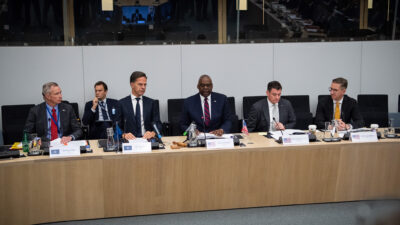
NATO defence ministers meet their Indo-Pacific counterparts. Towards a global alliance?

In October 2024, the very first meeting of NATO and Indo-Pacific defence ministers took place. The event reflected the deepening practical cooperation between the partners from the two poles of Eurasia, which was intensified by Russia’s full-scale invasion of Ukraine. Despite the geographical distance between the two areas, their security systems are more interconnected...

More →

Baltic Team, Visegrad Team

IEŚ Commentaries 1176
31 July 2024
Aleksandra Poznar | Michał Paszkowski - Baltic Team, Visegrad Team

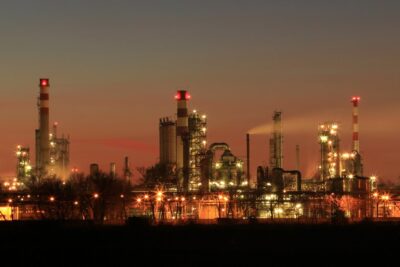
Ukraine has restricted crude oil transit via the southern branch of the Druzhba pipeline

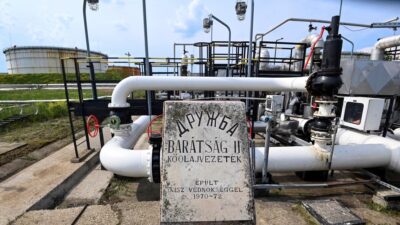
In June 2024, the Ukrainian authorities expanded their list of sanctioned entities to include Lukoil, which supplies crude oil to MOL Group refineries. This led to the suspension of crude oil supplies in mid-July 2024 to the Bratislava (Slovakia) and Százhalombatta (Hungary) plants. Both plants, thanks to the derogations they received in 2022 for sanctions imposed by the European...

More →

Visegrad Team

IEŚ Commentaries 1162
12 July 2024
Aleksandra Poznar - Visegrad Team

The Sovereignty Protection Office in Hungary – a threat to media freedom?

The Hungarian government has been systematically taking steps to tighten control over the media and limit funding for opposition parties for over a dozen years. An example of such measures is the adoption of the Law on the Protection of National Sovereignty by the Hungarian National Assembly in December 2023. Under this act, a new state administration body, the Office for the...

More →

Visegrad Team

IEŚ Commentaries Brief 1160
11 July 2024
Jakub Bornio | Aleksandra Poznar - Visegrad Team

Hungarian Prime Minister Viktor Orbán’s official visit to Russia

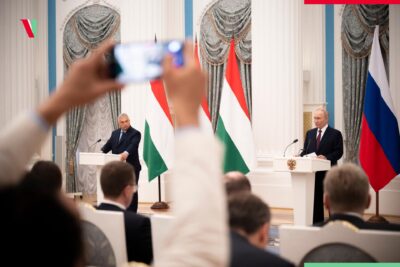
On 5 July 2024 Hungarian Prime Minister Viktor Orbán and representatives of the Hungarian government made an official visit to Russia, where they met with Russian President Vladimir Putin. During the official part of the meeting, they discussed both Hungarian-Russian bilateral relations and the international situation. V. Orbán, although not delegated to represent the entire...

More →

Visegrad Team

IEŚ Commentaries 1159
8 July 2024
Jakub Bornio | Aleksandra Poznar - Visegrad Team

Hungarian Prime Minister’s first visit to Kyiv since the outbreak of war

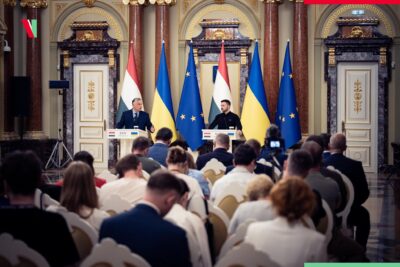
On 2 July 2024, Hungarian Prime Minister Viktor Orbán paid an official visit to Kyiv for the first time in 12 years. It was also the first time since the outbreak of the full-scale war with Russia, where high-level government talks were held. The visit also included a meeting between V. Orbán and Ukrainian President Volodymyr Zelensky. They primarily discussed the issues of...

More →

Baltic Team, Visegrad Team

IEŚ Commentaries 1135
5 June 2024
Jakub Bornio | Damian Szacawa - Baltic Team, Visegrad Team

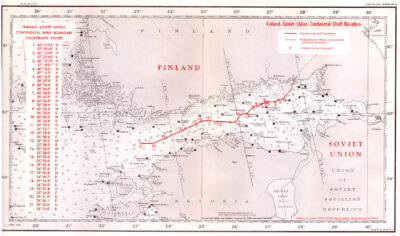
Finland’s response to the Russian Federation’s provocations regarding the change of maritime borders in the Baltic Sea

On 22 May 2024, the Russian Federation presented a draft that could lead to the revision of the internal waters boundary in the Baltic Sea. Despite its removal from the agenda of the legislative work of the Russian Duma, the proposal has nevertheless caused considerable concern among neighbouring states due to the potential revision of bilateral and multilateral agreements...

More →

Baltic Team, Visegrad Team

IEŚ Commentaries Brief 1102
12 April 2024
Łukasz Lewkowicz | Marlena Gołębiowska - Baltic Team, Visegrad Team

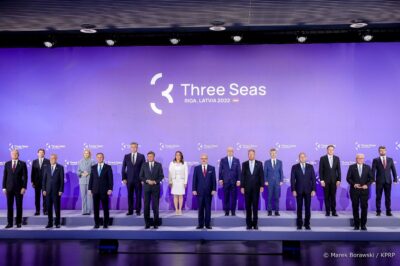
The Three Seas Initiative after the Vilnius Summit: security first

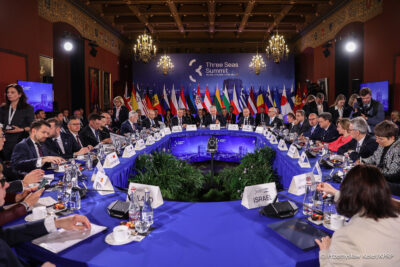
On 11 April 2024, the 9th summit of The Three Seas Initiative (3SI) occurred in Vilnius. The 3SI is a regional cooperation format initiated in 2016 and developed by the heads of Central European countries. A key objective of the initiative is to stimulate the development of energy, transport, and digital infrastructure. There are currently 13 EU Member States participating in 3SI,...

More →

Baltic Team, Visegrad Team

IEŚ Commentaries 1075
12 March 2024
Jakub Bornio | Damian Szacawa - Baltic Team, Visegrad Team

Sweden in NATO: Relevance for Central and Eastern Europe

On 7 March 7 2024, Swedish Prime Minister Ulf Kristersson and the state’s Foreign Minister Tobias Billström handed over the accession documents to US Secretary of State Antony Blinken, who, as representative of the Washington Treaty depositary state, officially announced that Sweden had become the 32nd member of the North Atlantic Treaty Organisation. Sweden’s presence in...

More →

Visegrad Team

IEŚ Commentaries 1034
17 January 2024
Jakub Bornio - Visegrad Team

Airspace violations in Central and Eastern European countries in the context of the war in Ukraine

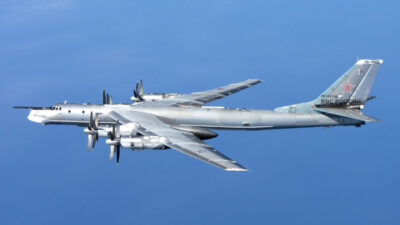
Due to the outbreak of a full-scale conflict between Russia and Ukraine, there have been several incidents involving air and missile threats, as well as air defence systems in the airspace of Central and Eastern European countries (CEEC). Certainly, some of these incidents have been intentional provocations by Russia against NATO, Ukraine or Moldova, aimed at pursuing a specific...

More →

Baltic Team, Visegrad Team

IEŚ Commentaries 976
16 October 2023
Szczepan Czarnecki | Michał Paszkowski - Baltic Team, Visegrad Team

Reorganization of the gas sector in Czechia

In Czechia, under the influence of the Russian Federation’s full-scale attack on Ukraine, there has been a change in the operation of energy companies, which are supposed not only to meet business objectives but also to strengthen the state’s energy security. In this context, in the past few months, we have seen the implementation of two acquisitions by companies wholly owned...

More →

Visegrad Team

IEŚ Commentaries 952
20 September 2023
Jakub Bornio - Visegrad Team

The development of military cooperation as part of multinational units among Visegrad countries (V4) in 2023

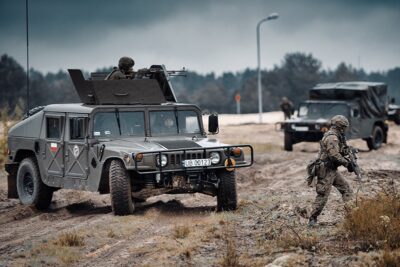
The geopolitical location of the Visegrad Group countries at the centre of NATO’s eastern flank makes them an important keystone in the security processes of the Central and Eastern European region. The military dimension of the V4 cooperation has been its key element since the platform’s inception when the countries coordinated their efforts to join NATO. As a result of the...

More →

Baltic Team, Visegrad Team

IES Commentaries 846
15 May 2023
Marlena Gołębiowska | Łukasz Lewkowicz - Baltic Team, Visegrad Team

Preparations for the Three Seas Initiative Bucharest summit: 3SI countries in response to Russian aggression in Ukraine

On September 6-7, 2023, Romania will host a summit of the Three Seas Initiative (3SI) which, for the second time, will be against the background of the ongoing Russo-Ukrainian war. Despite settling relations between 3SI and Ukraine during last year’s summit in Riga, 3SI countries do not present a unified stance towards Russian aggression. Hungary has exhibited the most...

More →

Balkan Team, Baltic Team, Visegrad Team

IEŚ Commentaries 807
29 March 2023
Jan Muś | Michał Paszkowski | Dominik Héjj - Balkan Team, Baltic Team, Visegrad Team

Serbia-Hungary pipeline: a new chapter in energy cooperation

Serbia has been taking active steps for several months to diversify the sources and directions of crude oil supplies to the country’s only operating refinery in Panchevo. Due to sanctions imposed on Russia, the plant is currently unable to import crude oil from that country. However, the government in Belgrade is in favor of building a pipeline linking Serbia and...

More →

Visegrad Team

IEŚ Commentaries 717
28 October 2022
Łukasz Lewkowicz - Visegrad Team

Slovakia: an unstable public support for Ukraine and the West

Survey research from July 2022. “How are you Slovakia?”, conducted by researchers from the research agencies MNFORCE, Seesame and the Slovak Academy of Sciences, shows that the majority of Slovaks support a victory for Russia rather than Ukraine in the current Russian-Ukrainian conflict. At the same time, an earlier survey, conducted by the think tank Globsec, shows...

More →

Baltic Team, Visegrad Team

IEŚ Commentaries 613
30 May 2022
Łukasz Lewkowicz | Michał Paszkowski - Baltic Team, Visegrad Team

Slovakia: the game about crude oil supplies from Russia

In Slovakia, a debate has been going on for a long time about the possible imposition on crude oil supply embargo from Russia by the European Union countries. The Slovak government hopes to obtain an appropriate derogation period from these provisions. Technological and infrastructural reasons are indicated as the problem. The project of introducing a special tax on crude oil...

More →

Baltic Team, Visegrad Team

IEŚ Commentaries 585
29 April 2022
Michał Paszkowski | Łukasz Lewkowicz - Baltic Team, Visegrad Team

Slovakia: natural gas supply diversification with a government misunderstanding

Slovakia has condemned unequivocally Russia’s attack on Ukraine and is now consistently in favour of introducing an embargo on the import of energy resources and oil products from Russia. The country’s high dependency on natural gas supplies necessitates the creation of a more diversified structure of imports, which, however, in current market conditions, will be a serious...

More →

Visegrad Team

IEŚ Commentaries 501
24 January 2022
Łukasz Lewkowicz - Visegrad Team

Slovakia: Controversy over a Defense Agreement with the United States

On January 12, 2022, the government of Eduard Heger (OĽaNO) adopted a draft framework defense agreement with the US, which, inter alia, regulates the legal status of US soldiers and allows the US to use and modernize the Slovak military infrastructure. The document still has to be ratified by the parliament and signed by President Zuzana Čaputová. The contract will run for 10...

More →

Visegrad Team

IEŚ Commentaries 482
7 December 2021
Dominik Héjj - Visegrad Team

Hungary to hold referendum and elections on same day in 2022

On December 1, 2021, the Hungarian National Assembly adopted a resolution on the organization of a nationwide referendum. It is to be held on the same day as parliamentary elections. However, parliament is likely to extend the state of extreme danger soon. This means that at the moment, it is impossible to establish the date of these proposed events.

More →

Visegrad Team

IEŚ Commentaries 480
6 December 2021
Dominik Héjj - Visegrad Team

Hungary’s Eastern Policy and the Migration Crisis on the Eastern Border of the European Union

The Hungarian authorities, while expressing their solidarity with the countries affected by the migration crisis on the border with Belarus (namely Latvia, Lithuania, and Poland), do not recognize Alexander Lukashenko’s responsibility for causing it. The events on the eastern borders of the European Union did not in any way affect the Hungarian involvement in relations with the...

More →

Baltic Team, Visegrad Team

IEŚ Commentaries 475
30 November 2021
Łukasz Lewkowicz - Baltic Team, Visegrad Team

Slovakia resists construction of the Nord Stream 2 gas pipeline

The Nord Stream 2 (NS2) gas pipeline that is being built by the Russian company OAO Gazprom will have a significant impact on Slovakia‘s energy security. The country, like Ukraine, is concerned about limiting its role as a transit country, as well as Russia’s use of its monopoly position in Central Europe. Nevertheless, this is not a topic often raised in political debate....

More →

Baltic Team, Visegrad Team

IEŚ Commentaries 455
11 October 2021
Dominik Héjj - Baltic Team, Visegrad Team

Consistent increase in Hungary’s energy dependence on Russia

On September 27, 2021, Hungary signed a new natural gas supply contract with Russia, which would de-facto prevent the import of this commodity from any other location. The signing of the agreement is part of a consistent policy of the Viktor Orbán government, which is based on closer cooperation with Russia. The suggested alternatives (e.g., supplies from Azerbaijan) have so far...

More →

Baltic Team, Visegrad Team

IEŚ Commentaries 450
30 September 2021
Łukasz Lewkowicz - Baltic Team, Visegrad Team

Slovakia: price crisis and possible problems with access to natural gas

Currently, a significant challenge facing Slovakia is the rapidly growing prices of energy commodities, including natural gas. This problem affects not only large enterprises, but also individual clients. In addition to rising prices, the low level of filling of natural gas storage facilities is also worrying. Russia’s steps to reduce gas transport via Ukraine also directly...

More →

Visegrad Team

IEŚ Commentaries 446
17 September 2021
Dominik Héjj - Visegrad Team

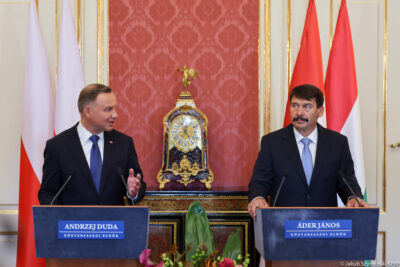
Priority areas of Polish-Hungarian cooperation according to presidents Andrzej Duda and János Áder

On September 8-9, 2021, President of the Republic of Poland Andrzej Duda paid an official visit to Budapest. It was the sixth visit of the Polish president to Hungary since 2015. During that six-year period, the presidents of Poland and Hungary met as many as 12 times, both as part of bilateral visits and in meetings of the Visegrad Group. Polish-Hungarian relations have been very...

More →