Publisher: Instytut Europy Środkowej
ISSN: 2657-6996
  • Grzegorz Gil
  • Anton Saifullayeu
  • Agnieszka Zajdel
  • Spasimir Domaradzki
  • Aleksandra Kuczyńska-Zonik
  • Damian Szacawa
  • Agata Tatarenko

IEŚ Commentaries

IEŚ Commentaries 371
15 April 2021

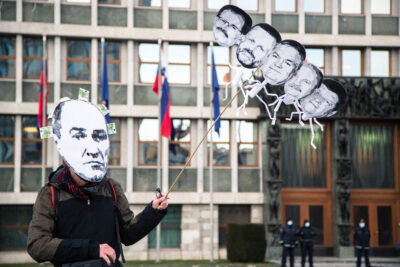
Slovenia: uncertain future of the Janez Janša’s government

Janez Janša's government is losing the support of the coalition parties and the parliamentary majority that would support his actions. Two attempts by the opposition to overthrow Janez Janša ended in failure. Opposition parties are unable to provide the majority needed to form a new government.

More →
IEŚ Commentaries 358
27 March 2021

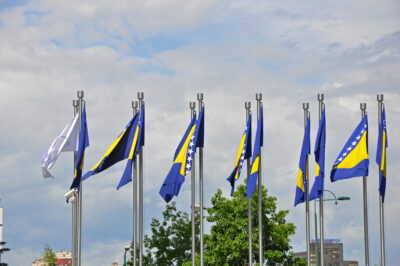
The debate on constitutional changes in Bosnia and Herzegovina is gaining momentum

The systemic reforms promoted by the international community in BiH aim at reaching an agreement between the leaders of the Bosniaks and Bosnian Croats. However, it ignores the most important problems faced by Bosnia and Herzegovina and its inhabitants – the ethnicization of politics with the simultaneous state capture of individual political groups. 26 years after the end of...

More →
IEŚ Commentaries 356
24 March 2021

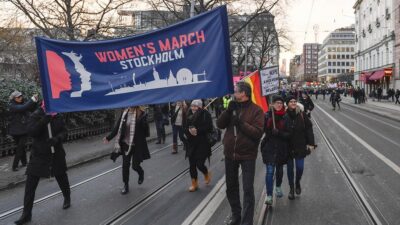
Sweden: gender equality and feminist foreign policy

Gender equality policy has been developed for many years in Sweden and is now one of the cornerstones of the country's international activities. It is visible especially in the course of Sweden’s activities on the forum of international organizations: the United Nations (UN) and the Organization for Security and Cooperation in Europe (OSCE). It is also the basis for feminist...

More →
IEŚ Commentaries 352
16 March 2021

Albania: The Demographic Crisis and Its Consequences

Albania has been facing the problem of a significant population decline for years, caused mainly by mass emigration and demographic decline. Financial bonuses, paid by the state since 2019 at the birth of a child, did not help to change the trend. The declining population of the country will be one of the most important challenges facing the government that emerged after the April...

More →
IEŚ Commentaries 348
9 March 2021

Romania: 30 years of demographic decline

Romania is struggling with a demographic decline that has been going on for many years. Eurostat research shows that Romanians are among the youngest in Europe when they have their first child. However, this does not affect significantly the number of babies born each year. The reason for the difficult demographic situation in Romania is mass emigration, mainly to Western...

More →
IEŚ Commentaries 347
5 March 2021

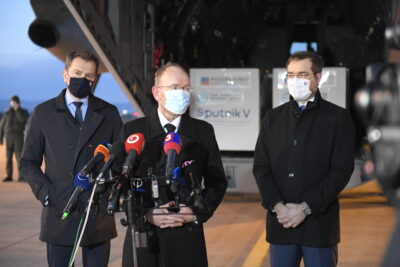
Slovakia: Political Crisis with Sputnik V in the Background

Slovakia has officially become the second EU country to approve the use of Sputnik V. According to the adopted plan, 2 million doses will be delivered to the country in the coming months. The decision was made by the prime minister, and the minister of health did not consult with the full government, which caused a serious political crisis within the government coalition. Indeed,...

More →
IEŚ Commentaries 345
3 March 2021

When food is scarce – Poverty in Central Europe

The picture of Central European poverty is clearly differentiated. In the Czech Republic, the rate of people at risk of poverty or social exclusion is the lowest in the entire European Union, while in Bulgaria – the highest. In total, 22 million citizens of the “new” EU countries were affected by this problem before the COVID-19 pandemic. The forecasts indicate...

More →
IEŚ Commentaries 342
26 February 2021

Oil companies in trouble: the condition of refineries in Central European countries

The refining industry, like many other sectors of the economy, is in an extremely difficult situation due to the COVID-19 pandemic. The introduced restrictions (e.g. closed land, sea, and air borders) resulted in a decrease in the demand for all types of fuels. There are over a dozen refineries in Central Europe which had to reduce cut runs. The persistently low refinery margins...

More →
IEŚ Commentaries 343
26 February 2021

Passing time: dumped chemical munitions as a challenge for states in the Baltic Sea region

Chemical munitions and chemical warfare agents (CWAs) on the bottom of the Baltic Sea and related incidents are not a new challenge for states in the Baltic Sea region (BSR). The Helsinki Commission (HELCOM) and numerous international projects made it possible to initially identify the problem. However, further monitoring of the situation and research are needed to locate all dump...

More →
IEŚ Commentaries 336
18 February 2021

Montenegro: the deteriorating pandemic situation

Montenegro is struggling with a growing number of people infected with SARS-CoV-2. In order to avoid overloading the healthcare system, the country introduces further restrictions. Vaccines, which are still lacking, are the nation’s best chance to improve the situation. The inconsistency of messages from the Ministry of Health leads to an increase in dissatisfaction with the...

More →
IEŚ Commentaries 334
17 February 2021

2030 National Development Strategy of the Republic of Croatia. Deepening integration with the EU

On February 5, 2021, the Croatian Parliament adopted the 2030 National Development Strategy for the Republic of Croatia. The strategy was adopted after many years of waiting for a document that would indicate the strategic directions of Croatia‘s development in the medium and long term. It contains only general points of reference without giving any specific solutions. Its...

More →
IEŚ Commentaries 332
11 February 2021

Facilitations in taking up work in Poland for Ukrainian medics

There has been a growing deficit in recent years of employees in the Polish healthcare system. Staff shortages in hospitals and clinics have become more severe due to emigration of medical personnel and the COVID-19 pandemic. On December 28, 2020, President Andrzej Duda signed the Law “On Amendments to Certain Laws in Order to Provide Medical Staff during the Period of Epidemic...

More →
IEŚ Commentaries 330
10 February 2021

Latvia: Social Discontent and a Decline in Trust in the Government

Negative emotions explosiveness in the society. Despite the relatively stable political and economic situation in Latvia since the announcement of a state of emergency (see „IEŚ Commentaries”, no. 308), imposed restrictions resulted in an increase of social discontent. A state of emergency was announced on November 9, 2020, and is planned to be in force till April 6,...

More →
IEŚ Commentaries 325
3 February 2021

Money laundering in the banks: The Baltic-Nordic front against financial crime

A series of bank scandals have overshadowed the reputation of the financial sector in the Baltic and Nordic States since 2018. The collapse of the bank in Latvia and the severe sanctions for banks in and Denmark that had branches in Estonia resulted from their money laundering for Soviet States, mainly Russia. In order to stop this illegal activity, the countries of the region, in...

More →
IEŚ Commentaries 320
28 January 2021

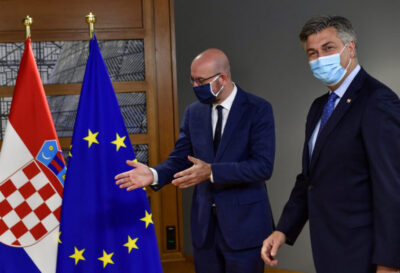
Croatia: the prospect of adopting the Euro in times of the COVID-19 pandemic and the recent earthquakes

Prime Minister Andrej Plenković leads the country through a series of disasters that hit Croatia last year – the COVID-19 pandemic and a series of earthquakes in Zagreb and central Croatia. Nevertheless, the project to adopt the euro as the official currency in 2023 remains a key element of his government’s program. Expected economic difficulties may, however, force...

More →
IEŚ Commentaries 319
27 January 2021

North Macedonia before the April census

This year, for the first time in 19 years, a census will be conducted in North Macedonia. The last one took place in 2002, and the decision was made by the Macedonian parliament on January 21, 2021 to finally conduct it after it had been postponed several times. Consequently, the exact number of inhabitants of North Macedonia is unknown. The census continues to evoke political...

More →
IEŚ Commentaries 315
23 January 2021

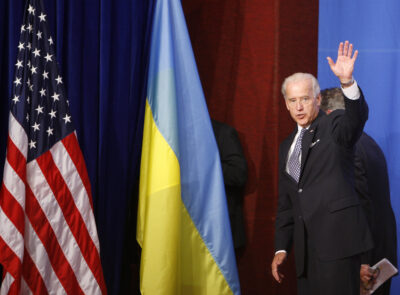
Joe Biden, the 46th President of the USA – Ukraine’s Hopes

Joe Biden’s election victory was welcomed in Ukraine. Donald Trump was treated with distrust resulting from the conviction that he was self-interested and did not understand the problems of Eastern Europe, and he was also accused of treating Ukraine instrumentally. Biden knows Ukraine, his administration will support Ukrainian reforms, and will probably put more pressure on...

More →
IEŚ Commentaries 311
19 January 2021

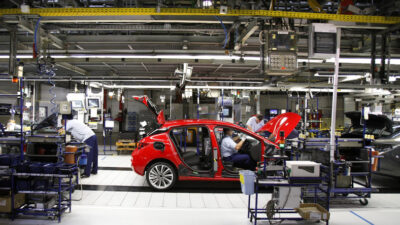
The automotive industry in Slovakia has overshadowed by the COVID-19 Pandemic

The automotive industry is a key industrial sector in Slovakia. It is also the main source of direct foreign investment in the country. The situation in the automotive industry during the first wave of the COVID-19 pandemic, when automotive manufacturers suspended car production, had a significant impact on the Slovak economy. On the other hand, the lockdown introduced by the...

More →
IEŚ Commentaries 308
8 January 2021

New restrictions and new (better) economic forecasts in the Baltic States

The increase in COVID-19 infections in the Baltic States in recent weeks has resulted in a number of restrictions, but the second lockdown will not affect the economies of the Baltic States as anticipated. Forecasts indicated that the recession in 2020 in Lithuania and Estonia would be one of the lowest in Europe. However, the most recent restrictions – such as the ban on moving...

More →
IEŚ Commentaries 298
8 December 2020

The Hungarian government amends the Fundamental Law for the ninth time

On November 10, 2020, a draft amendment to the Hungarian Constitution was submitted. Justice Minister Judit Varga submitted the bill with significant but politically controversial changes to the Constitution to be processed while Hungary struggles with the COVID-19 pandemic and the state of danger (article no 53 in Fundamental Law) being reintroduced. State of danger again. Due to...

More →
IEŚ Commentaries 297
8 December 2020

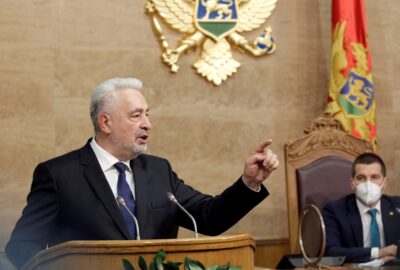
Montenegro: A new government

On December 4, 2020, the new government of Montenegro was elected, headed by Zdravko Krivokapić. For the first time in almost three decades, the Democratic Party of Socialists of Montenegro (Demokratska partija socijalista Crne Gore, DPS) – the political party the current President of Montenegro Milo Đukanović comes from – has not formed the government. The new prime...

More →
IEŚ Commentaries 292
27 November 2020

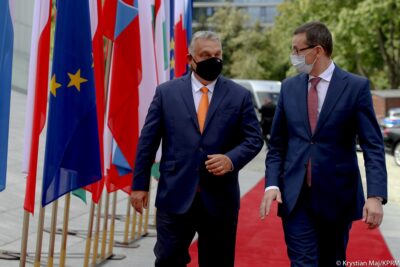
Hungarian veto EU budget – belief or strategy?

On November 8, Viktor Orbán sent a letter to the leaders of Germany, Slovenia, and Portugal, as well as to the President of the European Commission and the President of the European Council, informing them that if the EU budget and the Next Generation EU fund, dealing with the rule of law, where would be a Hungarian veto. A few days, later this veto was formalized during the...

More →
IEŚ Commentaries 289
24 November 2020

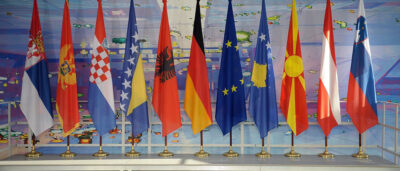
Deepening CEFTA integration

The Secretariat of the Central European Free Trade Agreement (CEFTA) announced the strengthening of cooperation between the CEFTA member states, which include the Western Balkans (WB6). Greater competitiveness and attractiveness of the region will positive affect trade with EU countries, especially with Germany and Italy, but also Russia, China, and Turkey. The declaration on the...

More →
IEŚ Commentaries 288
23 November 2020

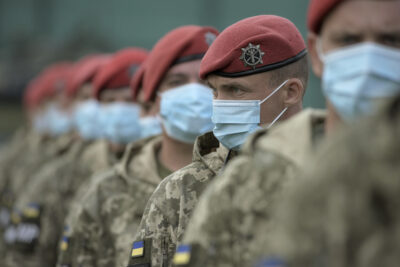
Ukraine: New Security Strategy, Old Problems

The national security strategy of Ukraine that was adopted in September 2020 refers to many levels as well as threats and challenges, and also specifies Poland as a strategic partner. In the military dimension, however, the implementation of the strategy may be difficult. Despite rapid development and modernization, both the Armed Forces of Ukraine and the arms sector are...

More →
IEŚ Commentaries 286
17 November 2020

Formats of multilateral cooperation in the Baltic Sea Region: in search of their niche

During the last six months participants of the various regional cooperation formats have started a discussion on the 2030 vision of the Baltic Sea Region (BSR). The year 2021 will be a summary period on cooperation effects already achieved (HELCOM Baltic Sea Action Plan), an interim period (the EU Strategy for the Baltic Sea Region), as well as a new stage of activity (result...

More →
Informacje z kraju i świata