
Publisher: Instytut Europy Środkowej
ISSN: 2657-6996
  • Sławomir Poleszak
  • Agnieszka Zajdel
  • Szczepan Czarnecki
  • Spasimir Domaradzki
  • Łukasz Krzyżanowski
  • Sławomir Łukasiewicz
  • Damian Szacawa
  • Agata Tatarenko

IEŚ Commentaries

Baltic Team, Visegrad Team
IEŚ Commentaries 1176
31 July 2024
Aleksandra Poznar | Michał Paszkowski - Baltic Team, Visegrad Team

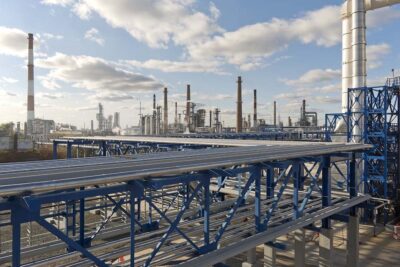
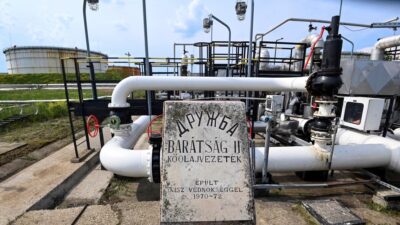
Ukraine has restricted crude oil transit via the southern branch of the Druzhba pipeline

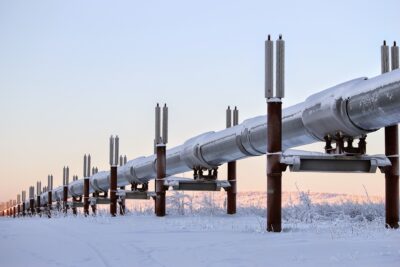
In June 2024, the Ukrainian authorities expanded their list of sanctioned entities to include Lukoil, which supplies crude oil to MOL Group refineries. This led to the suspension of crude oil supplies in mid-July 2024 to the Bratislava (Slovakia) and Százhalombatta (Hungary) plants. Both plants, thanks to the derogations they received in 2022 for sanctions imposed by the European...

More →

Baltic Team

IEŚ Commentaries 1175
31 July 2024
Marlena Gołębiowska - Baltic Team

Poland, Slovakia, Hungary, and Romania under the excessive deficit procedure

After the pandemic-related loosening of fiscal rules – in the new framework following the reform – the EU’s excessive deficit procedure is returning. On 26 July 2024, the Council of the European Union decided to initiate it against seven member states, including three from Central Europe: Poland, Slovakia, and Hungary. This is the result of failing to meet the deficit...

More →

Baltic Team

IEŚ Commentaries Brief 1172
29 July 2024

Estonia: priorities of the Kristen Michal’s government

On 23 July 2024, the government of Prime Minister Kristen Michal was sworn in at an extraordinary meeting of the Riigikogu after Kaja Kallas was nominated as EU High Representative for Foreign Affairs and Security Policy (“IEŚ Brief Commentaries”, no. 1167). Kristen Michal, Minister of Climate in Kaja Kallas’ government and previously Minister of Economy and Infrastructure...

More →

Baltic Team

IEŚ Commentaries 1164
16 July 2024
Michał Paszkowski - Baltic Team

Romania: ambitious plans for natural gas exports

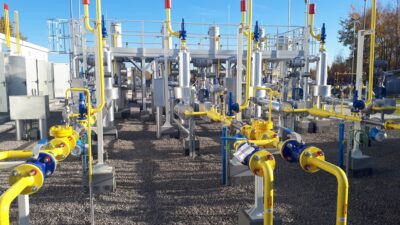
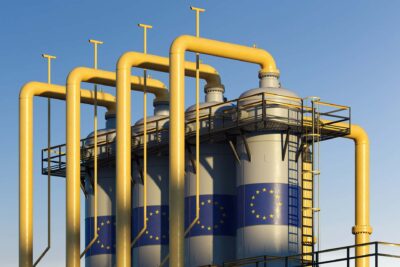
Romania, through the implementation of the Neptune Deep project, has the opportunity to become the largest producer of natural gas among the countries of the European Union. The development of the Domino and Pelican South fields could be an essential element in strengthening the energy security not only of Romania but also of Central European countries. The increased availability...

More →

Baltic Team

IEŚ Commentaries 1163
16 July 2024
Michał Paszkowski - Baltic Team

Hungary: energy cooperation with Caspian Sea countries

Russia in Hungary’s energy policy. For many years, Hungary’s energy policy has been directed toward close cooperation with the Russian Federation. Importantly, the outbreak of the war in Ukraine and the subsequent EU sanctions did not fundamentally lead to a reorientation of mutual political and economic relations. Crude oil supplies via the Druzhba pipeline, as well as...

More →

Baltic Team

IEŚ Commentaries 1149
20 June 2024
Michał Paszkowski - Baltic Team

Lithuania: a new vision for national energy security by 2050

In Lithuania, the government has adopted a new energy security strategy with a vision extending to 2050. The document, known as the National Energy Independence Strategy, is currently awaiting parliamentary approval. This new strategy is expected to enhance energy independence and enable the export of surplus electricity. The energy transition process is anticipated to accelerate...

More →

Baltic Team, Visegrad Team

IEŚ Commentaries 1135
5 June 2024
Jakub Bornio | Damian Szacawa - Baltic Team, Visegrad Team

Finland’s response to the Russian Federation’s provocations regarding the change of maritime borders in the Baltic Sea

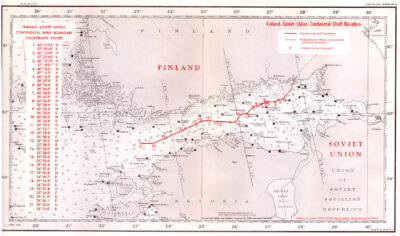
On 22 May 2024, the Russian Federation presented a draft that could lead to the revision of the internal waters boundary in the Baltic Sea. Despite its removal from the agenda of the legislative work of the Russian Duma, the proposal has nevertheless caused considerable concern among neighbouring states due to the potential revision of bilateral and multilateral agreements...

More →

Baltic Team

IEŚ Commentaries 1133
29 May 2024
Michał Paszkowski - Baltic Team

Slovakia: prospects for natural gas supplies from Azerbaijan

The Russian-Ukrainian war has initiated a strategic shift in Slovakia, moving away from the reliance on natural gas supplies from the Russian Federation. In this new geopolitical context, Slovakia’s challenge lies in securing alternative sources of this commodity, rather than in developing infrastructure, which has already been established over the years and currently...

More →

Baltic Team

IEŚ Commentaries 1129
27 May 2024
Marlena Gołębiowska - Baltic Team

The Blue Economy in Poland and the Baltic States

The blue economy is a concept of sustainable use of marine, ocean, and coastal resources aimed at supporting economic development while caring for the environment. In Poland, Lithuania, Latvia, and Estonia, this part of the economy generates over 5 billion EURof annual value added and employs over 200,000 workers. The blue economy also plays an important role in achieving the...

More →

Baltic Team

IEŚ Commentaries 1124
16 May 2024
Michał Paszkowski - Baltic Team

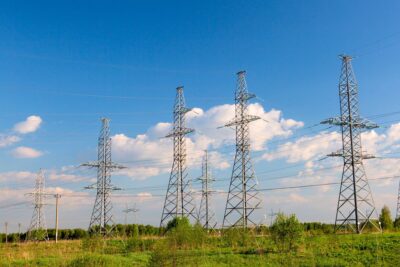
Moldova: potential problems with electricity availability in 2025

Moldova finds itself in a unique situation regarding electricity availability, which is sourced almost entirely from its breakaway region of Transnistria (which is not recognised by the majority of the international community). Energy is supplied from the Cuciurgani-Moldavskaya GRES (MGRES) power plant, which does not pay for natural gas from the Russian Federation. The planned...

More →

Baltic Team

IEŚ Commentaries 1113
25 April 2024
Michał Paszkowski - Baltic Team

Imports of commodities and petroleum products from the US to Poland and the Baltic States

The Russian Federation’s aggression toward Ukraine has led Poland, Lithuania, Latvia, and Estonia to cease the importation of commodities and petroleum products from Russia. This has resulted in a gap that has been filled by imports from other sources, including the United States of America. Collaboration with the US influences energy security and holds political significance...

More →

Baltic Team

IEŚ Commentaries 1105
19 April 2024
Marlena Gołębiowska - Baltic Team

The Weimar Triangle: new-old cooperation horizon

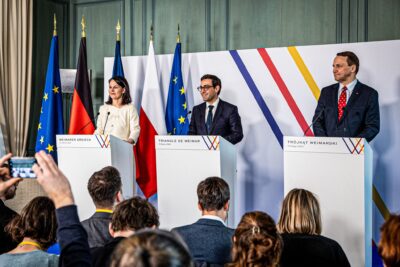
The Weimar Triangle, a platform for cooperation between France, Germany, and Poland, is gaining importance as a forum for dialogue on security issues in Europe. The recent meetings of this format show a determination to strengthen trilateral cooperation, including through the extension of activities into new areas such as protection against disinformation or building social ties,...

More →

Baltic Team

IEŚ Commentaries 1103
15 April 2024
Michał Paszkowski - Baltic Team

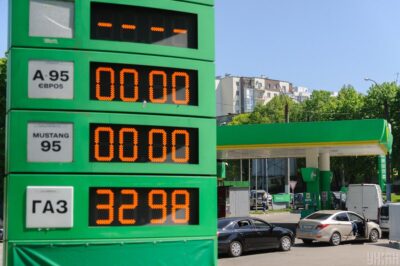
War in Ukraine: Kyiv’s efforts to ensure the availability of petroleum products

The ongoing war that began in 2022 has brought about significant changes in Ukraine’s energy market. In late 2023, the government in Kyiv introduced measures to bolster the country’s energy security by establishing a system of crude oil and petroleum products reserves. While work on the relevant legislation had been underway for years, it was the war and Ukraine’s attainment...

More →

Baltic Team, Visegrad Team

IEŚ Commentaries Brief 1102
12 April 2024
Łukasz Lewkowicz | Marlena Gołębiowska - Baltic Team, Visegrad Team

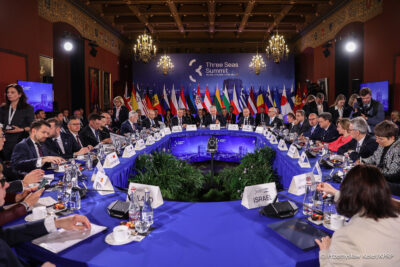
The Three Seas Initiative after the Vilnius Summit: security first

On 11 April 2024, the 9th summit of The Three Seas Initiative (3SI) occurred in Vilnius. The 3SI is a regional cooperation format initiated in 2016 and developed by the heads of Central European countries. A key objective of the initiative is to stimulate the development of energy, transport, and digital infrastructure. There are currently 13 EU Member States participating in 3SI,...

More →

Baltic Team

IEŚ Commentaries 1093
28 March 2024

Shelters in Lithuania. Catching up

Over the last two years, due to the ongoing Russian-Ukrainian war, Lithuania has amended the law on crisis management and civil protection. A review of existing collective protection facilities was carried out and activities to create new shelters were intensified. The current infrastructure, adapted to provide temporary protection for the population in times of emergency or war,...

More →

Baltic Team

IEŚ Commentaries 1079
19 March 2024
Michał Paszkowski - Baltic Team

Lukoil plans to sell its refinery in Bulgaria

For years, companies from the Russian Federation have been acquiring attractive energy assets around the world, including in Central European countries. The introduction of EU sanctions following Russia’s full-scale aggression against Ukraine has restricted the operations of some of these companies. This is the situation with the Burgas refinery in Bulgaria, owned by the...

More →

Baltic Team

IEŚ Commentaries 1076
14 March 2024
Marlena Gołębiowska - Baltic Team

Proposals for new fiscal rules in the EU: the perspective of Central European countries

The reform of public finance architecture in the European Union focuses on solutions that, on the one hand, will allow member states to ensure long-term financial stability, but on the other hand, will not stifle economic growth and the planned reforms and investments in strategic areas. Of particular importance from the point of view of Central European countries is the proposal...

More →

Baltic Team, Visegrad Team

IEŚ Commentaries 1075
12 March 2024
Jakub Bornio | Damian Szacawa - Baltic Team, Visegrad Team

Sweden in NATO: Relevance for Central and Eastern Europe

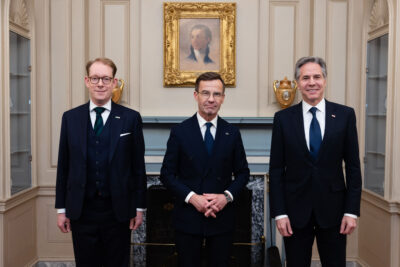
On 7 March 7 2024, Swedish Prime Minister Ulf Kristersson and the state’s Foreign Minister Tobias Billström handed over the accession documents to US Secretary of State Antony Blinken, who, as representative of the Washington Treaty depositary state, officially announced that Sweden had become the 32nd member of the North Atlantic Treaty Organisation. Sweden’s presence in...

More →

Baltic Team

IEŚ Commentaries 1074
11 March 2024

Security as a priority in Polish-Lithuanian relations

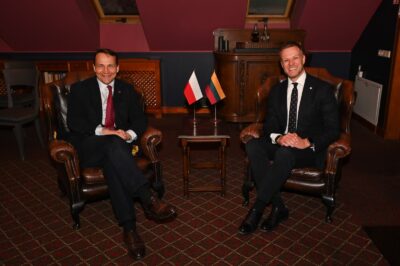
Poland and Lithuania have significantly strengthened their political relations recently, as numerous official visits at the highest level have reflected. Lithuania was visited by the Foreign Minister of Poland, Radosław Sikorski, then President Andrzej Duda, Speaker of the Sejm Szymon Hołownia, and Prime Minister Donald Tusk. Representatives of both countries have confirmed...

More →

Baltic Team

IEŚ Commentaries 1071
6 March 2024
Michał Paszkowski - Baltic Team

Natural gas demand decline in the Baltic countries in 2023

The Baltic countries have recorded another consecutive year of declining natural gas demand in 2023. Initially, such a situation was related to the COVID-19 pandemic and high commodity prices on exchanges in Europe (the result of price manipulation by Russia in 2021 and then the Russian-Ukrainian war in 2022). It is now expected that the projected economic growth in 2024 and the...

More →

Baltic Team

IEŚ Commentaries 1055
15 February 2024
Michał Paszkowski - Baltic Team

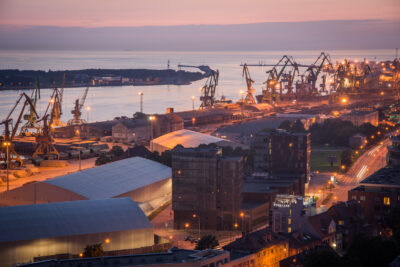
Crude oil terminals in Central European countries in the era of the shift away from Russian commodities

There are six crude oil terminals in the Central European countries of the European Union, supplying a total of sixteen refineries, several of which are located outside the EU. Due to the ongoing Russian-Ukrainian war, these terminals have been unloading tankers from countries that have not previously supplied crude oil to these refineries, or if they have, sporadically, in 2023....

More →

Baltic Team

IEŚ Commentaries 1035
18 January 2024
Michał Paszkowski - Baltic Team

LNG terminals in Central Europe: importance and operation

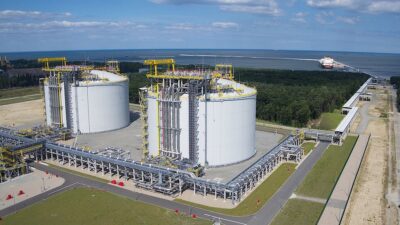
There are several LNG regasification terminals in Central European countries, aimed at securing natural gas supplies from various directions. In the context of the outbreak of the Russian-Ukrainian war, the importance of these terminals has definitely increased. At present, they are a key tool in efforts to diversify the sources and directions of natural gas supplies, especially...

More →

Baltic Team

IEŚ Commentaries 1027
11 January 2024
Michał Paszkowski - Baltic Team

Natural gas and crude oil markets in Central European countries in 2023

Central European countries in 2023 were taking active steps to strengthen energy security, which was a difficult process. A key strategic objective was to reduce dependence on hydrocarbons supplies from the Russian Federation by initiating new investments and continuing those already underway. Importantly, there are still countries on the continent that cooperate with Russia in...

More →

Baltic Team

IEŚ Commentaries 1024
28 December 2023

Year 2023: The State of the Central European Economies

In 2023, five Central European economies (Estonia, Lithuania, Hungary, Latvia, and the Czech Republic) are expected to end the year in a state of recession, while four (Hungary, Czech Republic, Poland, and Slovakia) are facing double-digit average annual inflation. Furthermore, as many as seven countries in the region are projected to record budget deficits exceeding 3% of GDP....

More →