
Publisher: Instytut Europy Środkowej
ISSN: 2657-6996
  • Sławomir Poleszak
  • Agnieszka Zajdel
  • Szczepan Czarnecki
  • Spasimir Domaradzki
  • Łukasz Krzyżanowski
  • Sławomir Łukasiewicz
  • Damian Szacawa
  • Agata Tatarenko

IEŚ Commentaries

Baltic Team

IEŚ Commentaries 1461
3 November 2025
Jakub Bornio - Baltic Team

The “Estonianisation” of European Foreign Policy as a Challenge to NATO Cohesion

Recent Russian provocations directed against certain members of the North Atlantic Alliance have generated yet another axis of internal division within NATO. In this context, the Alliance faces a series of challenges in the sphere of strategic communication. The principal objective of NATO member states remains the mitigation of the adverse effects of such divisions on the...

More →
Baltic Team

Komentarze IEŚ 1422
31 August 2025
Damian Szacawa - Baltic Team

Poland’s Presidency of the Council of the Baltic Sea States

On 1 July 2025, Poland assumed its fourth annual presidency of the Council of the Baltic Sea States (CBSS). The Polish chairmanship, which was taken over from Estonia, will last until 30 June 2026 and will be determined by the evolution of the CBSS’s role in addressing fundamental security challenges in the Baltic Sea Region, resulting from Russia’s aggression against Ukraine...

More →

Baltic Team

IEŚ Commentaries 1415
20 August 2025
Jakub Bornio - Baltic Team

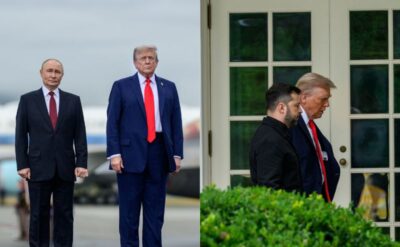
Diplomatic Manoeuvring over the Question of ‘Peace’ in Ukraine: The Trump–Putin and Trump–Zelensky Meetings

In August 2025, diplomatic efforts towards achieving a ‘peace agreement’ in Ukraine intensified. In the days following a remote meeting between European leaders and Donald Trump, a summit was held in Alaska between the US and Russian presidents. This was followed by a meeting in Washington between the US and Ukrainian presidents, with the participation of European leaders....

More →

Baltic Team

IEŚ Commentaries 1414
20 August 2025

The Baltic States and the Israeli–Palestinian Issue

France, the United Kingdom, and Canada have announced that they will decide on the recognition of Palestine as an independent state at the next session of the UN General Assembly. The Baltic states do not currently anticipate a similar step. Meanwhile, as the international community intensifies its calls for a ceasefire in the Gaza Strip, Israel’s representatives are actively...

More →

Baltic Team

IEŚ Commentaries 1411
14 August 2025
Jakub Bornio - Baltic Team

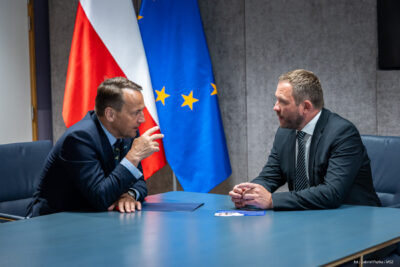
Extraordinary Meeting of European Leaders with U.S. President Donald Trump Prior to the Russia–United States Summit in Alaska

The announcement of a meeting between the US and Russian presidents in Alaska led to a further increase in diplomatic activity among European political leaders. The series of talks with Donald Trump on 13 August 2025, organised by the German Chancellor, provided an opportunity to present the position of the so-called European Big Five and Finland on the war in Ukraine and in the...

More →

Baltic Team

IEŚ Commentaries 1375
9 June 2025

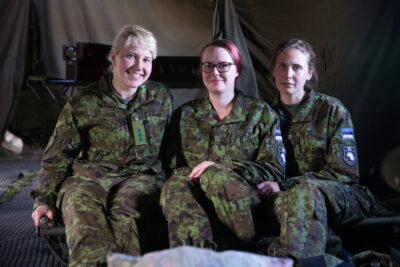
Women in the Army. Compulsory military service in the Nordic and Baltic states

Presently, only two European countries, Norway and Sweden, have introduced gender-neutral military conscription. Denmark will be joining this group in 2026. Finland, Lithuania, Latvia, and Estonia are also considering the possibility of introducing compulsory military service for women. This is driven by two key factors. Firstly, there is a need to strengthen the country’s...

More →

Baltic Team

IEŚ Commentaries 1362
23 May 2025
Michał Paszkowski - Baltic Team

Slovakia and Hungary oppose ban on import of Russian energy resources

Russia’s invasion of Ukraine in February 2022 prompted an unprecedented and multidimensional response from European Union member states, particularly in the field of energy policy. As part of efforts to reduce dependence on energy supplies from the Russian Federation, the European Commission announced the REPowerEU strategy, which sets out the goal of completely phasing out...

More →

Baltic Team, Eastern Team

IEŚ Commentaries 1359
20 May 2025
Aleksandra Kuczyńska-Zonik | Andrzej Szabaciuk - Baltic Team, Eastern Team

Orthodoxy in Estonia: Between Autonomy and National Security

The restoration of Estonian independence led to the division of the local Orthodox Church into two: one subordinate to the Patriarchate of Constantinople, and the other dependent on the Moscow Patriarchate. Following Russia’s invasion of Ukraine in 2022, Estonia took a harder line on the Estonian Orthodox Church of the Moscow Patriarchate. This resulted in administrative...

More →

Baltic Team, Collective Memory Team

IEŚ Commentaries 1357
19 May 2025
Jakub Bornio | Łukasz Lewkowicz - Baltic Team, Collective Memory Team

The Tenth Three Seas Initiative Summit in Warsaw: Key Decisions and Prospects for Development

The tenth anniversary summit of the Three Seas Initiative (3SI), hosted by President Andrzej Duda and traditionally coupled with a Business Forum, was held in Warsaw on 28-29 April 2025. The event was attended by representatives of 23 countries and entities. The primary accomplishments of the summit include the incorporation of new strategic partners, Spain and Turkey, along with...

More →

Baltic Team

IEŚ Commentaries 1356
16 May 2025
Michał Paszkowski - Baltic Team

The Renaissance of Nuclear Technology in Central Europe

Following Russia’s invasion of Ukraine in 2022, the countries of Central Europe were confronted with an unprecedented challenge of the urgent need to redefine the structure of their electricity supply in a permanent and strategic manner. The region’s prior dependence on energy commodities from the Russian Federation has come to be perceived not merely as an economic...

More →

Baltic Team

IEŚ Commentaries 1306
4 March 2025

Drone coalition: Latvia’s ambitions to boost security and international image

The international initiative to provide Ukraine with unmanned aerial systems, known as the Drone Coalition, was established on 14 February 2024 at the initiative of Latvia and currently comprises 18 countries. Its aim is to provide Ukraine with drones and assistance in training personnel in the use of new technologies. From Latvia’s point of view, the coalition is also an...

More →

Baltic Team

IEŚ Commentaries 1275
20 February 2025

Estonia: Controversy over changes to local elections law

Local elections will be held in Estonia in October 2025. The Riigikogu (Parliament) is currently considering a draft amendment to the Constitution that would restrict the right to vote in local elections for citizens of Russia, Belarus and/or persons of undetermined citizenship. While the aim of the amendment is to deprive citizens of hostile and aggressive states of the right to...

More →

Baltic Team

IEŚ Commentaries 1246
20 February 2025

New dimensions of Polish-Lithuanian cooperation: advanced technologies for security and innovative economy

The new Lithuanian government announces the continuation of the strategic partnership with Poland to ensure regional security. In the context of the ongoing Russian-Ukrainian war and the US presidential elections, this relationship could become even closer. In the coming years, the areas of Polish-Lithuanian cooperation will be expanded to include the innovative defence industry...

More →

Baltic Team

IEŚ Commentaries 1255
19 December 2024
Damian Szacawa - Baltic Team

Poland’s Northern Policy and Nordic-Baltic Cooperation

The Nordic-Baltic Eight (NB8) represents a dynamic model of regional cooperation that has united the five Nordic and three Baltic states in security, development and solidarity efforts since the 1990s. The evolution of NB8’s areas of cooperation – from supporting the Baltic states’ post-Soviet transition to current priorities like defense policy, cybersecurity, and energy...

More →

Baltic Team

IEŚ Commentaries 1236
31 October 2024
Damian Szacawa - Baltic Team

Sweden’s Security Policy: Operationalising Its Role in NATO

Upon joining NATO in March 2024, Sweden embarked on the process of integrating into the Alliance’s missions (including deterrence and defence) and embedding within NATO’s political and military structures. The centre-right coalition government led by Ulf Kristersson has significantly raised defence spending, reaching 2.14% of GDP in 2024. Over the next few years, priorities...

More →

Baltic Team

IEŚ Commentaries 1220
10 October 2024
Damian Szacawa - Baltic Team

Two Years of Ulf Kristersson’s Government in Sweden: A Shift in Migration Policy and the Fight Against Crime

The minority coalition government of Prime Minister Ulf Kristersson, in power in Sweden since October 2022, has faced significant challenges over the past two years, particularly in tackling organised crime. The policies introduced so far – such as stricter immigration laws and a reduction in refugee intake – have contributed to improving security but have also led to a...

More →

Baltic Team

IEŚ Commentaries 1211
30 September 2024
Michał Paszkowski - Baltic Team

Ukraine: limited prospects for Azerbaijan to fill the gap left by Russian natural gas

As of January 1, 2025, the five-year Russian-Ukrainian agreement from 2019 on the transit of Russian natural gas through Ukraine will expire. This will significantly impact the availability and price of natural gas in Europe during the upcoming heating season. While Azerbaijan could potentially help fill the gap left by Russian supplies, the chances of this are limited....

More →

Baltic Team

IEŚ Commentaries 1210
30 September 2024

Estonia: the concept of a ‘personal state’

In 2024, Estonia, one of the world’s leaders in digitalisation, announced the next stage in the development of its public administration. The concept of a ‘personal state’ (Est. personale riik) is intended to elevate the relationship between citizens and the administration to a new level. The state aims not only to respond to citizens’ needs, but also to anticipate...

More →

Baltic Team

IEŚ Commentaries 1207
26 September 2024
Michał Paszkowski - Baltic Team

Intensification of natural gas cooperation between the Baltic States and Finland

For many years, the Baltic States and Finland have actively worked to strengthen energy security, focusing on the creation of a unified natural gas market, increasing trade, and—since the outbreak of the full-scale war in Ukraine—coordinating anti-crisis measures in the energy sector. One key aspect of this effort was the adoption of amendments to Latvia’s Energy Act...

More →

Baltic Team

IEŚ Commentaries 1204
24 September 2024

Russians banned from buying property in states of the Baltic Sea region

The countries of the Baltic Sea region have been of interest to Russian entrepreneurs and investors for years due to their geographical proximity and dynamic economic development. As a result, some real estate located near strategic facilities is currently owned by Russians, posing a challenge to the security of the countries in the region. Bans on the purchase of land by citizens...

More →

Baltic Team

IEŚ Commentaries 1202
22 September 2024
Damian Szacawa - Baltic Team

Poland’s Presidency in the European Union Strategy for the Baltic Sea Region (EUSBSR)

On 1 July 2024, Poland assumed the annual presidency of the European Union Strategy for the Baltic Sea Region (EUSBSR), which will last until June 2025. In addition to advancing projects aligned with the three primary priorities – protecting the sea, fostering regional integration, and enhancing prosperity – Poland intends to improve regional security and increase cooperation...

More →

Baltic Team

IEŚ Commentaries 1191
29 August 2024
Michał Paszkowski - Baltic Team

Croatia’s Oil Infrastructure: A Key Element of Central European Energy Security

Due to its strategic geographical location and existing infrastructure, Croatia plays a critical role in the supply of crude oil to refineries in Bosnia and Herzegovina, Serbia, Hungary, and Slovakia. The Omišalj crude oil terminal and the Adria pipeline are particularly significant in this regard. The importance of this infrastructure has grown since the outbreak of the...

More →

Baltic Team

IEŚ Commentaries 1187
26 August 2024
Damian Szacawa - Baltic Team

“Soft security” in the Baltic Sea Region: regional cooperation to enhance societal resilience and critical infrastructure protection

The Nordic states consider critical infrastructure protection as part of their comprehensive security. The long-standing tradition of trans-border cooperation in this area will facilitate the implementation of the EU’s Critical Entities Resilience (CER) Directive. The exchange of experience and practical operational cooperation within regional structures (Nordic Council of...

More →

Baltic Team

IEŚ Commentaries 1185
22 August 2024
Michał Paszkowski - Baltic Team

Expansion of natural gas infrastructure in Southern Europe

The process of expanding energy transport capacity is currently underway in Southern Europe, with a particular focus on the natural gas market. Since the outbreak of the full-scale war in Ukraine in 2022, the primary goal has been to ensure greater diversification of natural gas sources and supply routes to Central European countries. Given the reduced availability of natural gas...

More →

Baltic Team

IEŚ Commentaries 1179
2 August 2024

Civil defence system in Estonia

The civil defence system in Estonia is part of a comprehensive model of security, in which society actively participates in the process of building the country’s resilience and is able to respond independently to military and non-military challenges. The peculiarities of the country’s civil defence system are: 1) the use of innovative communication solutions; 2) the...

More →