
Publisher: Instytut Europy Środkowej
ISSN: 2657-6996
  • Sławomir Poleszak
  • Agnieszka Zajdel
  • Szczepan Czarnecki
  • Spasimir Domaradzki
  • Łukasz Krzyżanowski
  • Sławomir Łukasiewicz
  • Damian Szacawa
  • Agata Tatarenko

IEŚ Commentaries

Baltic Team

Komentarz 438
2 September 2021

Latvia is preparing for the parliamentary elections in 2022

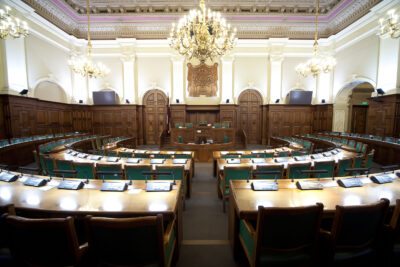
The municipal elections in Latvia, held in June 2021, have opened the informal election campaign season. Political activity of the candidates who intend to run in the parliamentary elections, scheduled to be held on October 1 next year, has increased. Their initiatives are undoubtedly influenced by the migration crisis and the uncertainty of political and social situations caused...

More →
Baltic Team, Visegrad Team

Komentarze IEŚ 436
31 August 2021
Łukasz Lewkowicz - Baltic Team, Visegrad Team

The Three Seas Initiative ahead of the Riga Summit: politically inspired, commercially driven

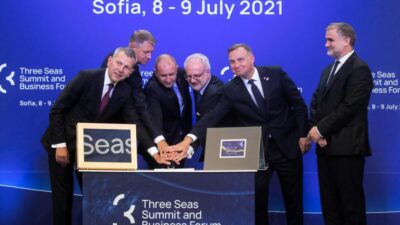
Next year’s Seventh Summit of the Three Seas Initiative (TSI) will be held in Riga. In light of the main challenge facing TSI, which is finding financing for priority projects in the region, President Egils Levits announced that Latvia plans to focus on raising private capital to improve transportation, energy, and digital infrastructure in this part of Europe. A kind of...

More →

Baltic Team

Komentarze IEŚ 434
26 August 2021
Michał Paszkowski - Baltic Team

Winter is coming. Central European countries and their preparations for the increased natural gas demand

In Central European countries (as in other parts of the continent), the level of natural gas stored in underground gas storage (UGS) facilities before the coming autumn-winter period is low. This situation is a consequence of the limited availability of this commodity. Market conditions are not very favourable, and if such a situation continues in coming months, problems with the...

More →

Baltic Team

IEŚ Commentaries 390
19 May 2021
Marlena Gołębiowska - Baltic Team

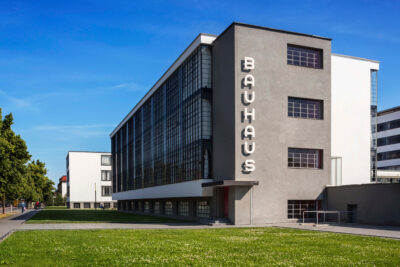
The New European Bauhaus: the challenges of Central Europe in terms of energy-efficient construction

The path to the ambitious European Union goal of climate neutrality leads largely through energy-efficient construction. Its creation is to be fostered by the New European Bauhaus – an initiative aimed at bringing together the knowledge and experience of representatives of various fields in order to redirect construction to low-carbon tracks. The countries of Central Europe face...

More →

Baltic Team

IEŚ Commentaries 389
19 May 2021

Pandemics of social inequalities: status of national and ethnic minorities in Latvia and Estonia

In Latvia and Estonia the pandemic highlighted and deepened socio-economic inequalities due to nationality and ethnicity. The higher rates of COVID-19 among minorities may have resulted from limited access to high-quality health services and information in minority languages. In addition, the lower socio-economic status of the minorities compared to the titular communities,...

More →

Baltic Team

IEŚ Commentaries 356
24 March 2021
Damian Szacawa - Baltic Team

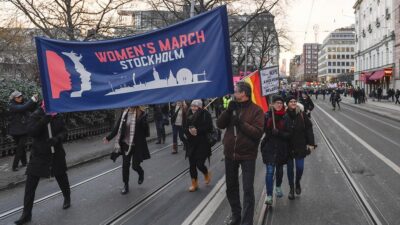
Sweden: gender equality and feminist foreign policy

Gender equality policy has been developed for many years in Sweden and is now one of the cornerstones of the country's international activities. It is visible especially in the course of Sweden’s activities on the forum of international organizations: the United Nations (UN) and the Organization for Security and Cooperation in Europe (OSCE). It is also the basis for feminist...

More →

Baltic Team

IEŚ Commentaries 345
3 March 2021
Marlena Gołębiowska - Baltic Team

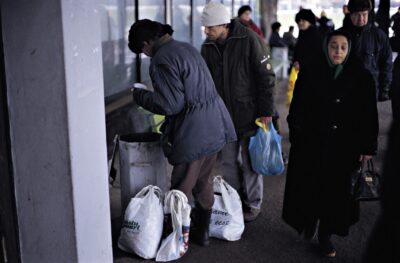
When food is scarce – Poverty in Central Europe

The picture of Central European poverty is clearly differentiated. In the Czech Republic, the rate of people at risk of poverty or social exclusion is the lowest in the entire European Union, while in Bulgaria – the highest. In total, 22 million citizens of the “new” EU countries were affected by this problem before the COVID-19 pandemic. The forecasts indicate...

More →

Baltic Team

IEŚ Commentaries 342
26 February 2021
Michał Paszkowski - Baltic Team

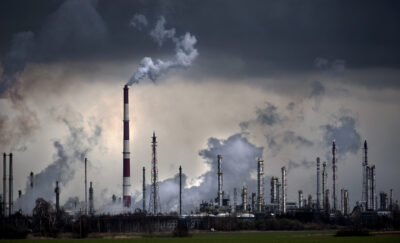
Oil companies in trouble: the condition of refineries in Central European countries

The refining industry, like many other sectors of the economy, is in an extremely difficult situation due to the COVID-19 pandemic. The introduced restrictions (e.g. closed land, sea, and air borders) resulted in a decrease in the demand for all types of fuels. There are over a dozen refineries in Central Europe which had to reduce cut runs. The persistently low refinery margins...

More →

Baltic Team

IEŚ Commentaries 343
26 February 2021
Damian Szacawa - Baltic Team

Passing time: dumped chemical munitions as a challenge for states in the Baltic Sea region

Chemical munitions and chemical warfare agents (CWAs) on the bottom of the Baltic Sea and related incidents are not a new challenge for states in the Baltic Sea region (BSR). The Helsinki Commission (HELCOM) and numerous international projects made it possible to initially identify the problem. However, further monitoring of the situation and research are needed to locate all dump...

More →

Baltic Team

IEŚ Commentaries 330
10 February 2021

Latvia: Social Discontent and a Decline in Trust in the Government

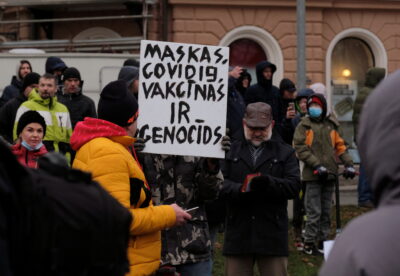
Negative emotions explosiveness in the society. Despite the relatively stable political and economic situation in Latvia since the announcement of a state of emergency (see „IEŚ Commentaries”, no. 308), imposed restrictions resulted in an increase of social discontent. A state of emergency was announced on November 9, 2020, and is planned to be in force till April 6,...

More →

Baltic Team

IEŚ Commentaries 325
3 February 2021
Marlena Gołębiowska - Baltic Team

Money laundering in the banks: The Baltic-Nordic front against financial crime

A series of bank scandals have overshadowed the reputation of the financial sector in the Baltic and Nordic States since 2018. The collapse of the bank in Latvia and the severe sanctions for banks in and Denmark that had branches in Estonia resulted from their money laundering for Soviet States, mainly Russia. In order to stop this illegal activity, the countries of the region, in...

More →

Baltic Team

IEŚ Commentaries 308
8 January 2021
Marlena Gołębiowska - Baltic Team

New restrictions and new (better) economic forecasts in the Baltic States

The increase in COVID-19 infections in the Baltic States in recent weeks has resulted in a number of restrictions, but the second lockdown will not affect the economies of the Baltic States as anticipated. Forecasts indicated that the recession in 2020 in Lithuania and Estonia would be one of the lowest in Europe. However, the most recent restrictions – such as the ban on moving...

More →

Baltic Team

IEŚ Commentaries 286
17 November 2020
Damian Szacawa - Baltic Team

Formats of multilateral cooperation in the Baltic Sea Region: in search of their niche

During the last six months participants of the various regional cooperation formats have started a discussion on the 2030 vision of the Baltic Sea Region (BSR). The year 2021 will be a summary period on cooperation effects already achieved (HELCOM Baltic Sea Action Plan), an interim period (the EU Strategy for the Baltic Sea Region), as well as a new stage of activity (result...

More →

Baltic Team

IEŚ Commentaries 247
4 September 2020

The international role of Lithuania towards the crisis in Belarus

Lithuania has become the greatest advocate for the Belarusian problem, not only regionally but also globally. Its quick response and strong voice in favor of democratic processes in Belarus are determined by its experiences related to the Lithuanian resistance to the Soviet regime and its security concerns in the region. Despite the tense bilateral relations, the historical...

More →

Baltic Team

Komentarze IEŚ 228
31 July 2020
Damian Szacawa - Baltic Team

Norway in the United Nations Security Council 2021-2022: “talented strategist” or “running young fox”? (Damian Szacawa)

On June 17, 2020, Norway was elected as a non-permanent member of the United Nations Security Council (UNSC) for 2021-2022. Of the five priorities presented by Norway, special attention was paid to the need to respect international law and strengthen the structures of multilateral cooperation. These ambitious goals are accompanied by numerous global challenges, requiring the...

More →

Baltic Team

IEŚ Commentaries 203
25 June 2020
Damian Szacawa - Baltic Team

New hopes for enhanced cooperation within the reformed Council of the Baltic Sea States (Damian Szacawa)

On May 19th, a meeting of foreign ministers of the Council of Baltic Sea States (CBSS) was held. The virtual meeting (videoconference) was organized due to the COVID-19 pandemic. During the session, the ministers approved the CBSS reform, as well as raised issues of cooperation in the Baltic Sea region during the COVID-19 pandemic, while other issues involved youth involvement in...

More →

Baltic Team

Komentarze IEŚ 191
22 May 2020
Dominik Wilczewski - Baltic Team

New normality in the “Baltic Bubble” (Dominik Wilczewski)

The Baltic States are recording their first successes in stopping the spread of the novel coronavirus. Although it is too early to pinpoint exactly the actions that have contributed to such an effect, the swift decisions taken to introduce restrictions and the readiness of societies to comply with the relevant measures were certainly of key importance. Maintaining the intensity of...

More →

Baltic Team

Komentarze IEŚ 135
13 March 2020
clivio - Baltic Team

Whistleblower in Lithuanian special services (Dominik Wilczewski)

According to information provided by Vytautas Bakas, a member of Lithuanian Seimas, the State Security Department (Valstybės saugumo departamentas, VSD) in 2018–2019 allegedly gathered information about the entourage of the then presidential candidate Gitanas Nausėda and about Vygaudas Ušackas, a candidate for nomination in the presidential primaries in the opposition...

More →

Baltic Team

ies-komentarze-130-33-2020.pdf
29 February 2020
Damian Szacawa - Baltic Team

Chinese Dragon in the Arctic and Its Influence on the Policy of Norway and Denmark in the Baltic Sea Region (Damian Szacawa)

The growing influence of China on the global international order and the Euro-Atlantic security system will be a challenge for many states. This process has been recognized in the foreign and security policy strategies of Denmark and Norway, which are particularly interested in China’s policy and developments in the North Atlantic area and the Arctic. Both regions have a...

More →

Baltic Team

Komentarze IEŚ 122
25 February 2020
clivio - Baltic Team

Rail Baltica Slows Down – Problems Growing Around the Investment (Aleksandra Kuczyńska-Zonik)

The goal of Rail Baltica is to integrate the Baltic states into the European rail network. In addition to the mobility, the quality of rail services and the improvement access to them, the project is also expected to contribute to the development of business and tourism, and the increase of goods exchange within the region. However, an audit published in December 2019 questioned,...

More →

Baltic Team

Komentarze IEŚ 52
13 August 2019
clivio - Baltic Team

Gazprom’s troubles with completing Nord Stream 2 (Damian Szacawa)

On 3 August, Nord Stream 2 AG, responsible for designing, developing and subsequent maintenance of Nord Stream 2 (North European Gas Pipeline, NS2), announced that one gas pipeline, located in the exclusive economic zone (EEZ) of Sweden, was completed. However, the company has not been granted the permission to continue with NS2 on Danish waters. Jeppe Kofod, the current Minister...

More →

Baltic Team

1 August 2019

Estonia’s climate policy in light of the European Union’s 2050 climate neutrality (Aleksandra Kuczyńska-Zonik)

Estonia has been objecting to the EU’s 2050 climate neutrality strategy. The country’s decision-makers argue that the EU member states ought to enjoy enough flexibility as to select domestic instruments of climate policies in relation to the level of the country’s development and social justice. The issue revolves around Estonia being able to introduce incremental changes...

More →