Skip to content

Keyword: Security

IEŚ Commentaries 1656
8 July 2026

Effectiveness of Ukrainian attacks on Russia’s oil and fuel infrastructure

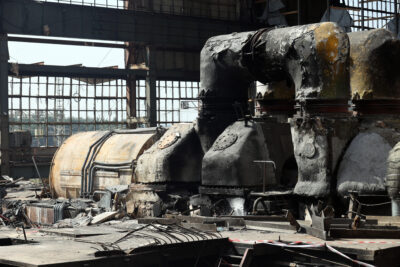
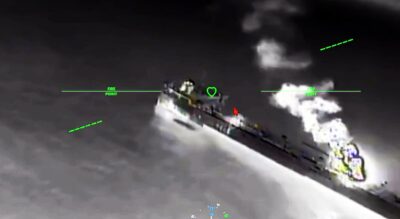
Ukrainian strikes on Russia’s oil and fuel infrastructure are no longer limited to isolated sabotage or military operations; they are now producing measurable economic and organisational effects. A series of attacks on refineries, fuel depots, transhipment terminals, and elements of transmission infrastructure have led to reduced operations at some facilities, disruptions in...

More: Effectiveness of Ukrainian attacks on Russia’s oil and fuel infrastructure

IEŚ Commentaries 1652
2 July 2026

European Union Sanctions on Russian Natural Gas Supplies in the Context of the Security of Central European Countries

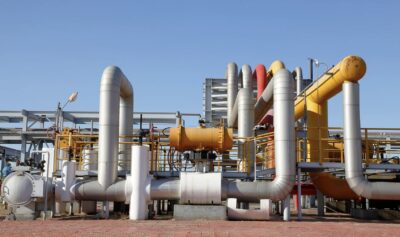
The entry into force of successive EU restrictions on imports of Russian natural gas is intended to complete the process of phasing out supplies from Russia and to permanently reshape the structure of the European market for this commodity. The REPowerEU regulation, adopted in early 2026, provides for a gradual phase-out of imports: from a ban on concluding new contracts, through...

More: European Union Sanctions on Russian Natural Gas Supplies in the Context of the Security of Central European Countries
IEŚ Commentaries 1632
2 June 2026

Czechia’s Efforts to Strengthen National Fuel Security

In recent years, Czechia’s oil sector has come under significant geopolitical and infrastructure-related pressure, prompting the government to take steps to strengthen national fuel security. These measures have focused on phasing out Russian crude oil, diversifying supply sources, expanding transmission infrastructure, and increasing the role of the state in stock management...

More: Czechia’s Efforts to Strengthen National Fuel Security
IEŚ Commentaries 1625
26 May 2026

The United States Is Making Decisions Regarding Its Military Contingents in Europe: Six Implications for Poland

The decision to suspend the deployment of a rotational contingent of the United States Armed Forces to Poland has brought to light structural deficiencies in bilateral relations. The uncertainty generated by this decision merely exemplifies the broader challenges inherent in the asymmetrical Polish-American partnership. Improving the condition of these relations requires Polish...

More: The United States Is Making Decisions Regarding Its Military Contingents in Europe: Six Implications for Poland
IEŚ Commentaries 1552
10 March 2026

The Devastated Ukrainian Power Sector and the Growing Dependence on Electricity Imports from the European Union

Ukraine’s power sector is among the most heavily damaged components of the country’s infrastructure as a result of the full-scale war launched in February 2022. A system that only a few years earlier possessed substantial export potential to European Union member states has, over the four years of war, undergone profound technical and structural degradation. Large-scale...

More: The Devastated Ukrainian Power Sector and the Growing Dependence on Electricity Imports from the European Union
IEŚ Commentaries 1544
4 March 2026

The U.S.–Israel–Iran Conflict and the Energy and Economic Situation of Central European Countries

The armed conflict between the United States, Israel, and Iran—encompassing both strikes on targets inside Iran and Iranian retaliatory attacks on energy infrastructure in the Persian Gulf—together with the effective suspension of maritime traffic through the Strait of Hormuz, has triggered the most severe shock to global energy markets since Russia’s invasion of Ukraine in...

More: The U.S.–Israel–Iran Conflict and the Energy and Economic Situation of Central European Countries
IEŚ Commentaries 1533
25 February 2026

Hungary and Slovakia in the Face of a Disruption to Crude Oil Supplies via the Druzhba Pipeline

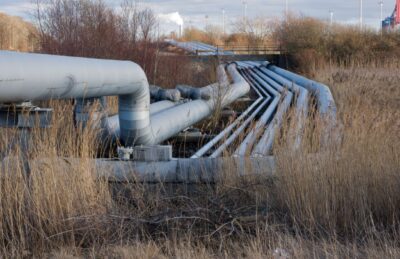
The Druzhba pipeline constitutes a critical component of Central Europe’s energy infrastructure, supplying Russian crude oil to refineries in Slovakia and Hungary. Following the suspension of deliveries through the southern branch on 27 January 2026, both countries found themselves facing a serious threat to energy security, as they remain among the last EU member states still...

More: Hungary and Slovakia in the Face of a Disruption to Crude Oil Supplies via the Druzhba Pipeline
IEŚ Commentaries 1522
10 February 2026

A “Military Schengen Area” in the Baltic States

On 30 January 2026, the Ministers of Defence of Lithuania, Latvia, and Estonia signed a Declaration of Intent on the establishment of the Baltic Military Mobility Area (BMMA). The objective is to streamline procedures and facilitate the expeditious movement of troops and equipment across the three nations, particularly in crisis situations. The initiative aims to increase the...

More: A “Military Schengen Area” in the Baltic States
IEŚ Commentaries 1523
10 February 2026

The Price of Security: Moldova’s Electricity Market in 2025

The year 2025 proved to be a breakthrough year for Moldova in terms of energy security, yet it was also exceptionally challenging due to rising electricity prices. Following the suspension of natural gas deliveries to the MGRES power plant (located in Transnistria) via Ukrainian territory – a facility that for many years served as a pillar of the national power system –...

More: The Price of Security: Moldova’s Electricity Market in 2025
IEŚ Commentaries 1515
28 January 2026

The United States National Defense Strategy and the Security of Central and Eastern Europe

The United States National Defense Strategy, published by the Department of War, operationalises and further specifies the assumptions of U.S. foreign policy articulated in the National Security Strategy. The Pentagon’s vision of the international environment assumes that U.S. policy will be guided by a doctrine of “practical realism”, the prioritisation of the Indo-Pacific...

More: The United States National Defense Strategy and the Security of Central and Eastern Europe
Informacje z kraju i świata