The establishment of the Bergen Group, bringing together selected NATO members, forms part of the United States’ strategy of encouraging its European allies to assume greater responsibility for the Alliance’s conventional defence. The choice of participants nevertheless raises questions about the intentions of the Donald Trump administration and the implications of this initiative for NATO cohesion. It is also important to consider the extent to which cooperation in smaller formats may contribute to more effective deterrence of Russia, the strengthening of US influence, and the shaping of the balance of power in Europe.
The establishment of the Bergen Group. On 4 June 2026, representatives of the defence ministries of Finland, Germany, the Netherlands, Norway, Poland, Sweden and the United States (US) met at Haakonsvern, a Norwegian naval base in Mathopen, on the outskirts of Bergen. The meeting took place approximately one month before the NATO summit in Ankara (“IEŚ Commentaries”, No. 1666). The defence ministries issued no official statements on the proceedings or outcomes of the talks, which may indicate a deliberate effort to limit public transparency. The consultations were not reported until several days later, when their initiator, US Under Secretary of War Elbridge Colby, publicised them. In a post on X devoted to the meeting, he noted that it had brought together allies who “rapidly meeting their Hague spending commitments (“IEŚ Commentaries”, No. 1387), have the scale to contribute, and are ready to get down to practical business”[1]. Explaining the reasons for US involvement in the initiative, Colby emphasised that it was intended to enable Europeans to assume primary responsibility for conventional defence, while supporting them in planning and investment in the defence industry, in line with the concept of NATO 3.0 (“IEŚ Commentaries”, No. 1666). A second meeting, with Denmark and Türkiye joining the group, took place on the sidelines of the North Atlantic Alliance summit in Ankara. Shortly before the summit, the Norwegian newspaper Dagens Næringsliv reported that the first meeting had established what became known as the Bergen Group – named after the venue – and comprising selected NATO members[2]. It remains unclear whether Türkiye and Denmark became permanent members. To date, the participants in the next meeting, reportedly scheduled by Politico to take place in Poland in November 2026, have not been announced[3].
Controversy surrounding the group’s membership. The selection of states invited to participate in this format has prompted media speculation and numerous comments from analysts and politicians[4]. Most assessments have centred on the allegation that the US is seeking to deepen divisions within Europe and thereby weaken NATO’s collective character. The omission of France and the United Kingdom was particularly emphasized since both possess considerable capabilities by European standards; are involved in deterring Russia; and are the only European states with nuclear capabilities. The exclusion of the Baltic states also appeared to defy expectations among some observers. These states have for years maintained the level of defence spending required by NATO and, given their proximity to Russia and the disparity in military capabilities, have a particularly strong interest in the Alliance’s security decision-making process. Professor Phillips P. O’Brien, an international relations analyst at the University of St Andrews, regarded their exclusion as a deliberate US decision. In his view, “The Trump administration is trying to keep these five out of this discussion because they are vital to European defense being more united (and less reliant on the USA)”[5].
From its hegemonic position, the US exploits existing divisions within NATO and the EU, while contributing to their further exacerbation in order to expand its political influence. Yet the acquisition of greater responsibility for their own security by European NATO members – through the development of conventional deterrence capabilities, a course the Americans themselves are urging Europeans to pursue –could lead to greater strategic independence, or at the very least afford them greater political flexibility in their relations with the US. For decades, the American security umbrella has served as an important US’ leverage over its European allies. Exploiting divisions among them and retaining control over Europe’s strategic enablers allows the US to maintain its influence over European security policy. Despite the ambiguous signals emanating from Washington, NATO remains an instrument through which the US advances its interests in Europe and, more broadly, across Eurasia.
Divide et impera ad extra. Nevertheless, interpreting the selection of states for the Bergen Group solely as an attempt to deepen divisions among allies would be an oversimplification. Although this interpretation should not be dismissed, other factors must also be taken into account. Colby explicitly stressed that the group brings together states with the capabilities required to act as security providers. Despite allocating the required share of GDP to defence, the Baltic states remain, owing to the disparity between their military capabilities and those of Russia, primarily recipients rather than donors of allied support. Their NATO membership and particular exposure to the Russian threat do not, in themselves, provide sufficient grounds for their inclusion in this cooperative format by a US administration guided by the principles of “practical realism” (“IEŚ Commentaries”, No. 1515) and attaching particular importance to hard power.
France’s absence from the Bergen Group should be interpreted not only in light of its failure and hesitation to meet the relevant level of defence spending, but also as a consequence of persistent mistrust in Franco-American relations. From the US perspective, French concepts and initiatives – such as strategic autonomy, rooted in the Gaullist tradition, and the proposal to extend France’s nuclear umbrella to other European states – are seen not merely as efforts to reduce Europe’s dependence on the US, but also as attempts to curtail American influence in favour of a greater French role. Competition also extends to certain branches of the defence industry (for example, artificial intelligence and satellite reconnaissance) as well as to the energy sector. Although France is the world’s second-largest arms exporter, its systems have so far attracted limited interest among the Central and Eastern European states, which are substantial importers of defence equipment. France’s increased political and military engagement in the region was intended to establish its credibility as a partner and partially reverse this trend. French companies offering solutions that could provide alternatives to American strategic enablers are likely to be regarded by the US as competitors.
The selection of states comprising the Bergen Group is also likely to be linked to deterring Russia in a particular sub-region for which the US envisages this grouping as having responsibility. In the current configuration, the group’s territory and responsibilities correspond to the areas of responsibility of Joint Force Command Brunssum and Joint Force Command Norfolk (see Map 1), within the Northwest and Centre Joint Operation Areas (see Map 2). This may also partly explain the United Kingdom’s absence from the group, given that securing the GIUK Gap is likely to be its priority in the US administration’s strategic vision. The US presence at Haakonsvern is also relevant to monitoring this strategic passage: the base is one of two Norwegian facilities capable of accommodating US nuclear-powered submarines, and it hosted the Bergen Group’s inaugural meeting.
The Donald Trump administration favours international cooperation based on bilateral arrangements and smaller multilateral – or minilateral – formats, while limiting its involvement in the activities of large international organisations. This approach makes it easier for the US to position itself vis-à-vis its partners on its own terms and to pursue particular interests. The Bergen Group is another example of this strategy in practice.
At this stage, it is difficult to determine the significance of this format. The composition of the delegations –under-secretaries, deputy ministers and representatives of the armed forces – suggests that the group is primarily technical and practical in nature. Its establishment has nonetheless prompted lively analytical debate, drawing attention to the initiative’s potential political implications. The central question remains that of the US’s underlying intentions.
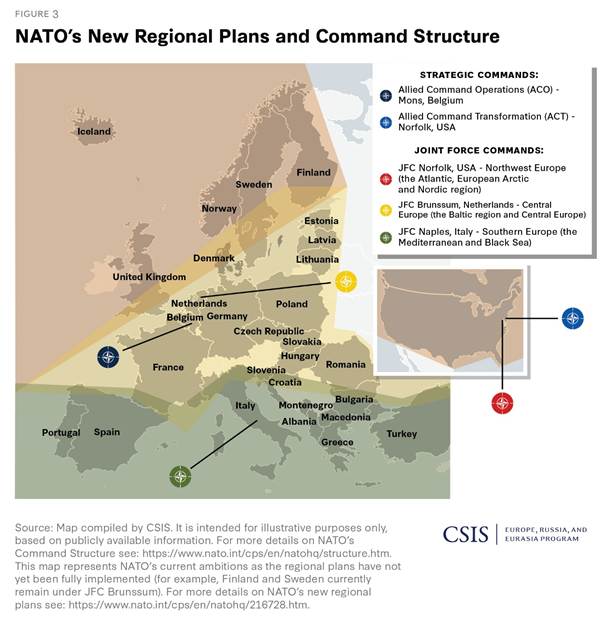
Map 1: https://www.csis.org/analysis/nato-ready-war
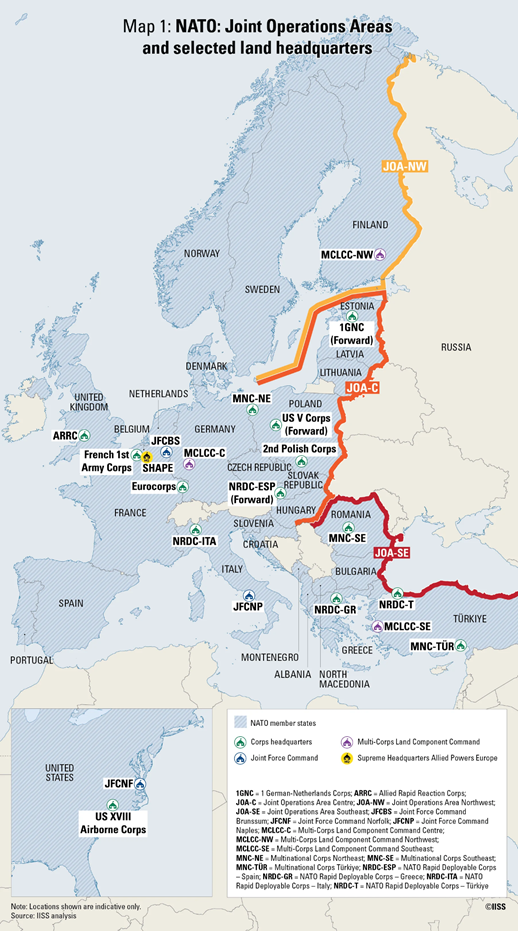
Map 2: https://www.iiss.org/online-analysis/military-balance/2026/07/natos-three-front-problem/
[1] See https://x.com/USWPColby/status/2064343669369360618 [accessed 22 October 2026].
[2] https://www.dn.no/kommentar/nato/donald-trump/jonas-gahr-store/norge-er-blitt-bjelleku-for-trump/2-1-2013052 [accessed 22 October 2026].
[3] See https://www.politico.eu/article/european-allies-push-back-against-us-led-nato-vip-club/ [accessed 22 October 2026].
[4] See the statements cited by Politico: ibid.; https://www.politico.com/news/2026/09/30/trump-nato-allies-left-out-01100310 [accessed 22 October 2026]; and the quotations reproduced below in the analysis.
[5] See https://phillipspobrien.substack.com/p/divide-and-rule-the-us-strategy-towards [accessed 22 October 2026].
[Photo @USWPColby / X]


Jakub Bornio
IEŚ Commentaries 1727 (232/2026)
The Bergen Group: A New Format for Cooperation within NATO