Keyword: Hungary

Eastern Team

IEŚ Commentaries 1607
4 May 2026
Jakub Olchowski - Eastern Team

Ukraine after Orbán’s defeat – restraint and waiting

Péter Magyar’s victory and Viktor Orbán’s defeat were greeted with cautious optimism in Ukraine. While the disappearance of one of Kyiv’s main critics within the EU opens up new opportunities for cooperation, reactions from politicians and experts remain reserved. From a Ukrainian perspective, this represents not a breakthrough, but rather a correction to Budapest’s...

More →

Eastern Team

IEŚ Commentaries 1594
20 April 2026
Michał Paszkowski - Eastern Team

The TISZA Party’s Victory and the Potential Shift in Hungary’s Energy Policy

A victory for the TISZA party (Tisztelet és Szabadság Párt) in Hungary’s 2026 parliamentary elections could trigger an adjustment to the country’s energy policy, which in recent years has been grounded in dependence on supplies of Russian commodities (crude oil and natural gas) and in nuclear cooperation under the Paks II project. The scope and pace of any changes, however,...

More →

Central and South-Eastern Europe Team

IEŚ Commentaries 1541
2 March 2026
Robert Rajczyk | Szczepan Czarnecki | Agata Tatarenko - Central and South-Eastern Europe Team

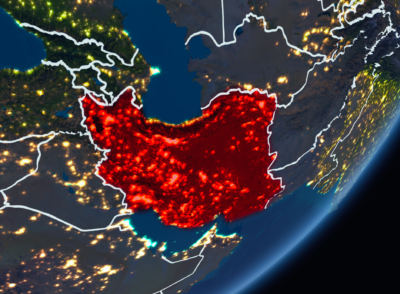
Reactions of Central European States to the U.S.–Israeli Strike on Iran

The U.S.–Israeli strike on Iran has forced Central European states to take clear positions. The prime minister of Slovakia used the occasion to criticize the European Union, while the Hungarian head of government incorporated the potential negative consequences of the intervention into his election campaign and Hunagry’s relations with Ukraine. The Czech Republic, in turn,...

More →

Baltic Team

IEŚ Commentaries 1533
25 February 2026
Michał Paszkowski - Baltic Team

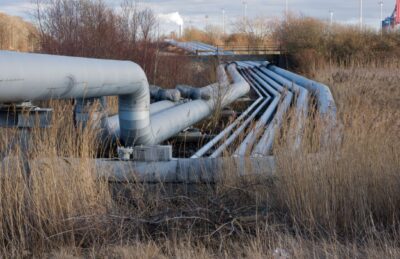
Hungary and Slovakia in the Face of a Disruption to Crude Oil Supplies via the Druzhba Pipeline

The Druzhba pipeline constitutes a critical component of Central Europe’s energy infrastructure, supplying Russian crude oil to refineries in Slovakia and Hungary. Following the suspension of deliveries through the southern branch on 27 January 2026, both countries found themselves facing a serious threat to energy security, as they remain among the last EU member states still...

More →

Baltic Team

IEŚ Commentaries 1506
22 January 2026
Michał Paszkowski - Baltic Team

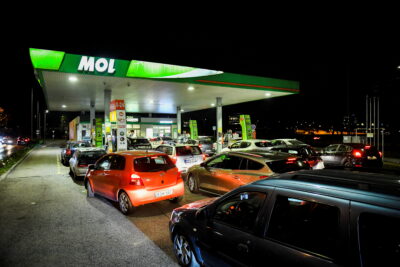
Hungarian MOL Takes Over Russian Shares in Serbian Company NIS

The declaration of intent by Gazprom Neft to sell its shares in the Serbian company Naftna Industrija Srbije (NIS) to the Hungarian firm MOL[1] represents one of the most significant developments in the Central European fuel market in recent years. MOL’s entry in place of the Russian owner is expected to restore the operational continuity of the Pancevo refinery while...

More →

Baltic Team

IEŚ Commentaries 1362
23 May 2025
Michał Paszkowski - Baltic Team

Slovakia and Hungary oppose ban on import of Russian energy resources

Russia’s invasion of Ukraine in February 2022 prompted an unprecedented and multidimensional response from European Union member states, particularly in the field of energy policy. As part of efforts to reduce dependence on energy supplies from the Russian Federation, the European Commission announced the REPowerEU strategy, which sets out the goal of completely phasing out...

More →

Baltic Team

IEŚ Commentaries 1356
16 May 2025
Michał Paszkowski - Baltic Team

The Renaissance of Nuclear Technology in Central Europe

Following Russia’s invasion of Ukraine in 2022, the countries of Central Europe were confronted with an unprecedented challenge of the urgent need to redefine the structure of their electricity supply in a permanent and strategic manner. The region’s prior dependence on energy commodities from the Russian Federation has come to be perceived not merely as an economic...

More →

Baltic Team

IEŚ Commentaries 1191
29 August 2024
Michał Paszkowski - Baltic Team

Croatia’s Oil Infrastructure: A Key Element of Central European Energy Security

Due to its strategic geographical location and existing infrastructure, Croatia plays a critical role in the supply of crude oil to refineries in Bosnia and Herzegovina, Serbia, Hungary, and Slovakia. The Omišalj crude oil terminal and the Adria pipeline are particularly significant in this regard. The importance of this infrastructure has grown since the outbreak of the...

More →

Baltic Team, Visegrad Team

IEŚ Commentaries 1176
31 July 2024
Aleksandra Poznar | Michał Paszkowski - Baltic Team, Visegrad Team

Ukraine has restricted crude oil transit via the southern branch of the Druzhba pipeline

In June 2024, the Ukrainian authorities expanded their list of sanctioned entities to include Lukoil, which supplies crude oil to MOL Group refineries. This led to the suspension of crude oil supplies in mid-July 2024 to the Bratislava (Slovakia) and Százhalombatta (Hungary) plants. Both plants, thanks to the derogations they received in 2022 for sanctions imposed by the European...

More →

Baltic Team

IEŚ Commentaries 1175
31 July 2024
Marlena Gołębiowska - Baltic Team

Poland, Slovakia, Hungary, and Romania under the excessive deficit procedure

After the pandemic-related loosening of fiscal rules – in the new framework following the reform – the EU’s excessive deficit procedure is returning. On 26 July 2024, the Council of the European Union decided to initiate it against seven member states, including three from Central Europe: Poland, Slovakia, and Hungary. This is the result of failing to meet the deficit...

More →
Informacje z kraju i świata