IES Commentaries

IEŚ Commentaries 1611
7 May 2026

Science diplomacy as an instrument of Russia’s influence in the Baltic Sea Region

Science diplomacy, traditionally viewed as a tool for cooperation and confidence-building between states, is increasingly being treated by Russia as a means to an end. In the Baltic Sea Region, academic cooperation, scientific research, and expert activities are being utilised by the Russian Federation as part of a broader strategy of influence – aimed at rebuilding its...

More →

IEŚ Commentaries 1607
4 May 2026

Ukraine after Orbán’s defeat – restraint and waiting

Péter Magyar’s victory and Viktor Orbán’s defeat were greeted with cautious optimism in Ukraine. While the disappearance of one of Kyiv’s main critics within the EU opens up new opportunities for cooperation, reactions from politicians and experts remain reserved. From a Ukrainian perspective, this represents not a breakthrough, but rather a correction to Budapest’s...

More →
IEŚ Commentaries 1605
1 May 2026

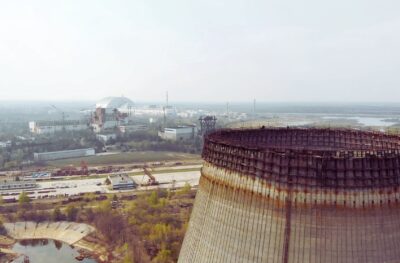
Ukraine’s Nuclear Sector 40 Years After the Chernobyl Disaster

Four decades after the Chernobyl disaster, it is evident that Ukraine’s nuclear sector has undergone a lasting shift toward risk management; rather than expansion, the priorities have become safety, reliability, and system resilience. The ongoing war has further tested this model, exposing the critical dependence of stable electricity generation on the power grid, as well as the...

More →
IEŚ Commentaries 1602
29 April 2026

From Election Results to Political Uncertainty: Coalition Formation after Slovenia’s 2026 Elections

The 2026 parliamentary elections in Slovenia failed to produce a clear winner, thereby opening space for complex coalition negotiations. The narrow margin between the two leading parties, Svoboda and SDS, combined with their substantial ideological differences, constrains viable coalition options and contributes to heightened political uncertainty. Election Results. According to...

More →
IEŚ Commentaries 1598
23 April 2026

Rebuilding Natural Gas Storage Levels in Central Europe under Challenging Geopolitical Conditions

The replenishment of natural gas stocks in Europe during 2026 is taking place amid heightened uncertainty, driven by simultaneous disruptions to the availability of liquefied natural gas (LNG) and geopolitical tensions in the Middle East. The low post‑winter storage fill level (around 29%) amplifies the scale of the challenge, while adverse price signals reduce the incentive for...

More →
IEŚ Commentaries 1594
20 April 2026

The TISZA Party’s Victory and the Potential Shift in Hungary’s Energy Policy

A victory for the TISZA party (Tisztelet és Szabadság Párt) in Hungary’s 2026 parliamentary elections could trigger an adjustment to the country’s energy policy, which in recent years has been grounded in dependence on supplies of Russian commodities (crude oil and natural gas) and in nuclear cooperation under the Paks II project. The scope and pace of any changes, however,...

More →
IEŚ Commentaries 1585
10 April 2026

The Prime Minister of Hungary’s Political Offensive at the End of the Election Campaign

The organisation of the convention for the populist right from the Patriots for Europe political group, the conservative CPAC conference, and the visit to Hungary of the American vice president are all elements of building an international position for Viktor Orbán and mobilising the electoral base before the parliamentary elections scheduled for April 12. Polls, conducted by...

More →
IEŚ Commentaries 1581
7 April 2026

From EU Standard Institutional Reform to Party Control – The transformation of Georgia’s Public Service

Georgia’s foreign policy shift has resulted in multiple repressive and undemocratic measures aimed at suppressing the protests triggered by the decision to halt EU accession negotiations. The civil service became one of the targets of the coercive apparatus for systemic subordination, transforming it from an institution striving for alignment with European standards into an...

More →
IEŚ Commentaries 1576
31 March 2026

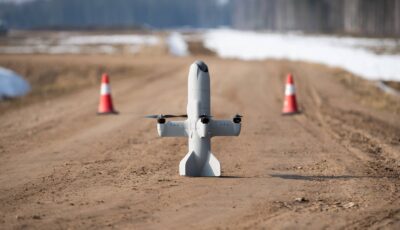
Drones do not win wars

The war in Ukraine demonstrates the growing role of digital technologies, unmanned systems, and electronic warfare. The mass use of drones, supported by a developed IT sector and efficient institutional adaptation, has allowed Ukraine to effectively limit its opponent’s military advantage. At the same time, even the most advanced technological solutions do not eliminate the...

More →
IEŚ Commentaries 1571
25 March 2026

The Crisis of Crude Oil Availability in Slovakia and Its Implications for the Regional Fuel Market

In 2026, liquid fuel tourism in Slovakia became one of the key manifestations of mounting tensions in the regional liquid fuel market, stemming from disruption on the crude oil supply side. Relatively low diesel prices – maintained despite the suspension of crude oil deliveries via the Druzhba pipeline, and the conflict in the Middle East – created strong demand-side...

More →
Informacje z kraju i świata