Skip to content

Keyword: Energy

IEŚ Commentaries 1729
26 October 2026

Europe’s Approach to Natural Gas Supplies from Russia

European countries have been reducing their purchases of Russian natural gas since Russia launched its full-scale war against Ukraine. However, the pace of this process has varied. In the first nine months of 2026, European Union member states imported approximately 11% more Russian liquefied natural gas (LNG) than in the same period of the previous year, despite the announced ban...

More: Europe’s Approach to Natural Gas Supplies from Russia
IEŚ Commentaries 1669
23 July 2026

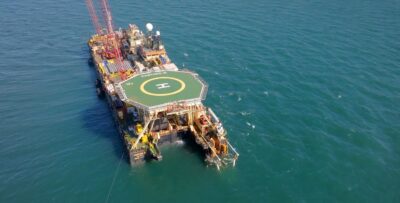
The Neptun Deep Project and the Changing Architecture of the Natural Gas Market in South-Eastern Europe

Neptun Deep is one of the most important energy projects currently under development in the European part of the Black Sea. Its launch, planned for 2027, could significantly alter Romania’s position in the natural gas market. The project, implemented by OMV Petrom and Romgaz, is expected to increase domestic production, strengthen Romania’s energy security, and create new...

More: The Neptun Deep Project and the Changing Architecture of the Natural Gas Market in South-Eastern Europe
IEŚ Commentaries 1656
8 July 2026

Effectiveness of Ukrainian attacks on Russia’s oil and fuel infrastructure

Ukrainian strikes on Russia’s oil and fuel infrastructure are no longer limited to isolated sabotage or military operations; they are now producing measurable economic and organisational effects. A series of attacks on refineries, fuel depots, transhipment terminals, and elements of transmission infrastructure have led to reduced operations at some facilities, disruptions in...

More: Effectiveness of Ukrainian attacks on Russia’s oil and fuel infrastructure
IEŚ Commentaries 1652
2 July 2026

European Union Sanctions on Russian Natural Gas Supplies in the Context of the Security of Central European Countries

The entry into force of successive EU restrictions on imports of Russian natural gas is intended to complete the process of phasing out supplies from Russia and to permanently reshape the structure of the European market for this commodity. The REPowerEU regulation, adopted in early 2026, provides for a gradual phase-out of imports: from a ban on concluding new contracts, through...

More: European Union Sanctions on Russian Natural Gas Supplies in the Context of the Security of Central European Countries
IEŚ Commentaries 1632
2 June 2026

Czechia’s Efforts to Strengthen National Fuel Security

In recent years, Czechia’s oil sector has come under significant geopolitical and infrastructure-related pressure, prompting the government to take steps to strengthen national fuel security. These measures have focused on phasing out Russian crude oil, diversifying supply sources, expanding transmission infrastructure, and increasing the role of the state in stock management...

More: Czechia’s Efforts to Strengthen National Fuel Security
IEŚ Commentaries 1185
22 August 2024

Expansion of natural gas infrastructure in Southern Europe

The process of expanding energy transport capacity is currently underway in Southern Europe, with a particular focus on the natural gas market. Since the outbreak of the full-scale war in Ukraine in 2022, the primary goal has been to ensure greater diversification of natural gas sources and supply routes to Central European countries. Given the reduced availability of natural gas...

More: Expansion of natural gas infrastructure in Southern Europe
IEŚ Commentaries 1164
16 July 2024

Romania: ambitious plans for natural gas exports

Romania, through the implementation of the Neptune Deep project, has the opportunity to become the largest producer of natural gas among the countries of the European Union. The development of the Domino and Pelican South fields could be an essential element in strengthening the energy security not only of Romania but also of Central European countries. The increased availability...

More: Romania: ambitious plans for natural gas exports
IEŚ Commentaries 1163
16 July 2024

Hungary: energy cooperation with Caspian Sea countries

Russia in Hungary’s energy policy. For many years, Hungary’s energy policy has been directed toward close cooperation with the Russian Federation. Importantly, the outbreak of the war in Ukraine and the subsequent EU sanctions did not fundamentally lead to a reorientation of mutual political and economic relations. Crude oil supplies via the Druzhba pipeline, as well as...

More: Hungary: energy cooperation with Caspian Sea countries
IEŚ Commentaries 1149
20 June 2024

Lithuania: a new vision for national energy security by 2050

In Lithuania, the government has adopted a new energy security strategy with a vision extending to 2050. The document, known as the National Energy Independence Strategy, is currently awaiting parliamentary approval. This new strategy is expected to enhance energy independence and enable the export of surplus electricity. The energy transition process is anticipated to accelerate...

More: Lithuania: a new vision for national energy security by 2050
IEŚ Commentaries 1133
29 May 2024

Slovakia: prospects for natural gas supplies from Azerbaijan

The Russian-Ukrainian war has initiated a strategic shift in Slovakia, moving away from the reliance on natural gas supplies from the Russian Federation. In this new geopolitical context, Slovakia’s challenge lies in securing alternative sources of this commodity, rather than in developing infrastructure, which has already been established over the years and currently...

More: Slovakia: prospects for natural gas supplies from Azerbaijan
Informacje z kraju i świata