Skip to content

Keyword: Energy

IEŚ Commentaries 1113
25 April 2024

Imports of commodities and petroleum products from the US to Poland and the Baltic States

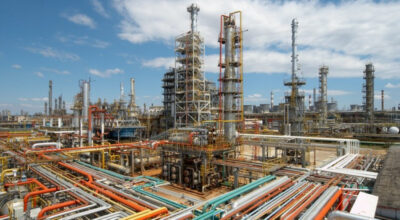
The Russian Federation’s aggression toward Ukraine has led Poland, Lithuania, Latvia, and Estonia to cease the importation of commodities and petroleum products from Russia. This has resulted in a gap that has been filled by imports from other sources, including the United States of America. Collaboration with the US influences energy security and holds political significance...

More: Imports of commodities and petroleum products from the US to Poland and the Baltic States
IEŚ Commentaries 1103
15 April 2024

War in Ukraine: Kyiv’s efforts to ensure the availability of petroleum products

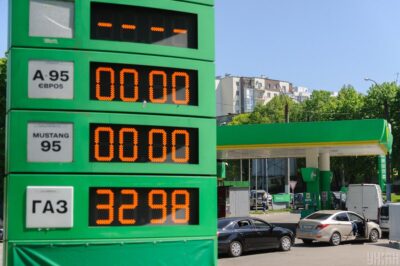
The ongoing war that began in 2022 has brought about significant changes in Ukraine’s energy market. In late 2023, the government in Kyiv introduced measures to bolster the country’s energy security by establishing a system of crude oil and petroleum products reserves. While work on the relevant legislation had been underway for years, it was the war and Ukraine’s attainment...

More: War in Ukraine: Kyiv’s efforts to ensure the availability of petroleum products
IEŚ Commentaries 1055
15 February 2024

Crude oil terminals in Central European countries in the era of the shift away from Russian commodities

There are six crude oil terminals in the Central European countries of the European Union, supplying a total of sixteen refineries, several of which are located outside the EU. Due to the ongoing Russian-Ukrainian war, these terminals have been unloading tankers from countries that have not previously supplied crude oil to these refineries, or if they have, sporadically, in 2023....

More: Crude oil terminals in Central European countries in the era of the shift away from Russian commodities
IEŚ Commentaries 1035
18 January 2024

LNG terminals in Central Europe: importance and operation

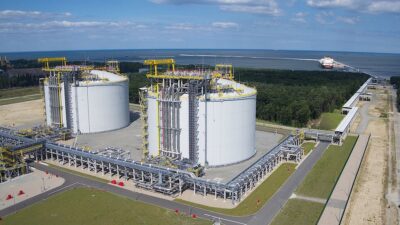
There are several LNG regasification terminals in Central European countries, aimed at securing natural gas supplies from various directions. In the context of the outbreak of the Russian-Ukrainian war, the importance of these terminals has definitely increased. At present, they are a key tool in efforts to diversify the sources and directions of natural gas supplies, especially...

More: LNG terminals in Central Europe: importance and operation
IEŚ Commentaries 1027
11 January 2024

Natural gas and crude oil markets in Central European countries in 2023

Central European countries in 2023 were taking active steps to strengthen energy security, which was a difficult process. A key strategic objective was to reduce dependence on hydrocarbons supplies from the Russian Federation by initiating new investments and continuing those already underway. Importantly, there are still countries on the continent that cooperate with Russia in...

More: Natural gas and crude oil markets in Central European countries in 2023
IEŚ Commentaries 955
20 September 2023

Bulgaria: technical government settlements on natural gas deal

In Bulgaria, the new government of Prime Minister Nikolai Denkov has ordered an investigation into the 2023 Bulgarian-Turkish agreement, which provides access for Bulgargaz to LNG terminals in Turkey and the Turkish transmission network. According to the government’s position, the agreement between Bulgargaz and BOTAŞ, which was concluded for a period of 13 years, is...

More: Bulgaria: technical government settlements on natural gas deal
IEŚ Commentaries 915
28 July 2023

Serbia activates natural gas supply efforts

Serbia has, for years, been dependent on natural gas supplies from the Russian Federation, and the resulting political influence has had consequences for its energy policy and the presence of Russian capital in key energy companies. In recent months, however, there has been a noticeable modification of the Belgrade government’s position on the importance of Russia in ensuring...

More: Serbia activates natural gas supply efforts
IEŚ Commentaries 879
28 June 2023

Sweden’s electricity sector challenges

For years, Sweden’s low electricity prices have been a direct consequence of the operation of the country’s nuclear and hydroelectric power plants. A stable level of energy demand has made Sweden an energy exporter, but the situation may change over the next several years. Such a situation will require appropriate investment measures. Over the years, negative public attitudes...

More: Sweden’s electricity sector challenges
IEŚ Commentaries 808
29 March 2023

Bulgaria considers returning to construction of Burgas-Alexandroupoli pipeline

Bulgaria is considering a return to the construction of the Burgas-Alexandroupoli pipeline, which would allow greater diversification of crude oil supplies to the Burgas refinery. The project was initiated as early as 1993, at which time it was intended to increase exports of Russian crude oil to international markets. The ongoing Russian-Ukrainian war and sanctions imposed on the...

More: Bulgaria considers returning to construction of Burgas-Alexandroupoli pipeline
IEŚ Commentaries 807
29 March 2023

Serbia-Hungary pipeline: a new chapter in energy cooperation

Serbia has been taking active steps for several months to diversify the sources and directions of crude oil supplies to the country’s only operating refinery in Panchevo. Due to sanctions imposed on Russia, the plant is currently unable to import crude oil from that country. However, the government in Belgrade is in favor of building a pipeline linking Serbia and...

More: Serbia-Hungary pipeline: a new chapter in energy cooperation
Informacje z kraju i świata