Keyword: Russia

Eastern Team

IEŚ Commentaries 1656
8 July 2026
Michał Paszkowski - Eastern Team

Effectiveness of Ukrainian attacks on Russia’s oil and fuel infrastructure

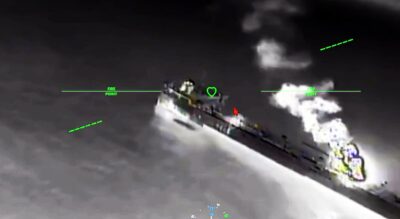
Ukrainian strikes on Russia’s oil and fuel infrastructure are no longer limited to isolated sabotage or military operations; they are now producing measurable economic and organisational effects. A series of attacks on refineries, fuel depots, transhipment terminals, and elements of transmission infrastructure have led to reduced operations at some facilities, disruptions in...

More →

Eastern Team

IEŚ Commentaries 1652
2 July 2026
Michał Paszkowski - Eastern Team

European Union Sanctions on Russian Natural Gas Supplies in the Context of the Security of Central European Countries

The entry into force of successive EU restrictions on imports of Russian natural gas is intended to complete the process of phasing out supplies from Russia and to permanently reshape the structure of the European market for this commodity. The REPowerEU regulation, adopted in early 2026, provides for a gradual phase-out of imports: from a ban on concluding new contracts, through...

More →

Eastern Team

IEŚ Commentaries 1620
19 May 2026
Michał Paszkowski - Eastern Team

Reconfiguring Gas Security in Southern Europe

In recent years, the architecture of energy security in the countries of Southern Europe has undergone a significant transformation, driven by supply shocks and shifts in the international environment. A region that for decades depended heavily on energy supplies from Russia is now playing an increasingly important role as a transit and balancing area for new natural gas flows...

More →

Eastern Team

IEŚ Commentaries 1615
13 May 2026

Ukrainian Strikes on Targets Deep Inside the Territory of the Russian Federation

In the ongoing war, Russia has consistently targeted Ukraine’s energy sector. In response—and as part of a strategy aimed at reducing the aggressor’s financial revenues from energy exports—Ukraine has increasingly shifted its kinetic operations towards Russian energy infrastructure, including refineries, crude oil terminals, transhipment facilities, and pipelines. In the...

More →

Eastern Team

IEŚ Commentaries 1605
1 May 2026
Michał Paszkowski - Eastern Team

Ukraine’s Nuclear Sector 40 Years After the Chernobyl Disaster

Four decades after the Chernobyl disaster, it is evident that Ukraine’s nuclear sector has undergone a lasting shift toward risk management; rather than expansion, the priorities have become safety, reliability, and system resilience. The ongoing war has further tested this model, exposing the critical dependence of stable electricity generation on the power grid, as well as the...

More →

Eastern Team

IEŚ Commentaries 1594
20 April 2026
Michał Paszkowski - Eastern Team

The TISZA Party’s Victory and the Potential Shift in Hungary’s Energy Policy

A victory for the TISZA party (Tisztelet és Szabadság Párt) in Hungary’s 2026 parliamentary elections could trigger an adjustment to the country’s energy policy, which in recent years has been grounded in dependence on supplies of Russian commodities (crude oil and natural gas) and in nuclear cooperation under the Paks II project. The scope and pace of any changes, however,...

More →

Eastern Team

IEŚ Commentaries 1576
31 March 2026
Jakub Olchowski - Eastern Team

Drones do not win wars

The war in Ukraine demonstrates the growing role of digital technologies, unmanned systems, and electronic warfare. The mass use of drones, supported by a developed IT sector and efficient institutional adaptation, has allowed Ukraine to effectively limit its opponent’s military advantage. At the same time, even the most advanced technological solutions do not eliminate the...

More →

Baltic Team

IEŚ Commentaries 1524
12 February 2026
Jakub Bornio - Baltic Team

The Impact of the Expiration of the New START Treaty on the Security of Central and Eastern Europe

On 5 February 2026, the Treaty on Measures for the Further Reduction and Limitation of Strategic Offensive Arms (New START), concluded in 2010 by the United States and Russia, expired. Although the treaty did not cover the systems used by Russia for nuclear coercion against the states of Central and Eastern Europe (CEE), its termination has global implications and therefore...

More →

Civic Studies Team

IEŚ Commentaries 1517
30 January 2026
Jędrzej Jander - Civic Studies Team

The Outlook for This Year’s Elections to the State Duma in Russia

In September 2026, elections to the State Duma—the lower chamber of the Federal Assembly—will take place in the Russian Federation. Although Russia’s system of power is built primarily around the prerogatives and authority of the president, the Duma remains one of the most important institutions of this formally democratic federation. Over more than two and a half decades of...

More →

Historical narrative and applied history team

IEŚ Commentaries 1510
26 January 2026
Jędrzej Piekara - Historical narrative and applied history team

Russian-Venezuelan Relations as a Factor in Russian Geopolitics[1]

In the decade after the Soviet collapse, Moscow’s room to manoeuvre in Latin America and the Caribbean was limited due to the scarcity of resources and reorientation of Russian diplomacy towards the West, which naturally lowered the region’s strategic weight in Russian thinking. The turn came in the early 2000s as a re-entry organised around reciprocity in the United States...

More →
Informacje z kraju i świata