Skip to content

Keyword: Russia

IEŚ Commentaries 1594
20 April 2026

The TISZA Party’s Victory and the Potential Shift in Hungary’s Energy Policy

A victory for the TISZA party (Tisztelet és Szabadság Párt) in Hungary’s 2026 parliamentary elections could trigger an adjustment to the country’s energy policy, which in recent years has been grounded in dependence on supplies of Russian commodities (crude oil and natural gas) and in nuclear cooperation under the Paks II project. The scope and pace of any changes, however,...

More: The TISZA Party’s Victory and the Potential Shift in Hungary’s Energy Policy
IEŚ Commentaries 1576
31 March 2026

Drones do not win wars

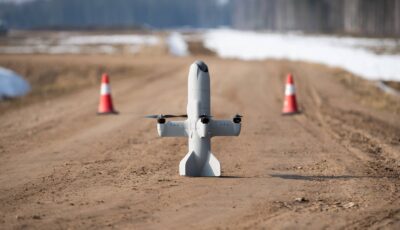
The war in Ukraine demonstrates the growing role of digital technologies, unmanned systems, and electronic warfare. The mass use of drones, supported by a developed IT sector and efficient institutional adaptation, has allowed Ukraine to effectively limit its opponent’s military advantage. At the same time, even the most advanced technological solutions do not eliminate the...

More: Drones do not win wars
IEŚ Commentaries 1524
12 February 2026

The Impact of the Expiration of the New START Treaty on the Security of Central and Eastern Europe

On 5 February 2026, the Treaty on Measures for the Further Reduction and Limitation of Strategic Offensive Arms (New START), concluded in 2010 by the United States and Russia, expired. Although the treaty did not cover the systems used by Russia for nuclear coercion against the states of Central and Eastern Europe (CEE), its termination has global implications and therefore...

More: The Impact of the Expiration of the New START Treaty on the Security of Central and Eastern Europe
IEŚ Commentaries 1517
30 January 2026

The Outlook for This Year’s Elections to the State Duma in Russia

In September 2026, elections to the State Duma—the lower chamber of the Federal Assembly—will take place in the Russian Federation. Although Russia’s system of power is built primarily around the prerogatives and authority of the president, the Duma remains one of the most important institutions of this formally democratic federation. Over more than two and a half decades of...

More: The Outlook for This Year’s Elections to the State Duma in Russia
IEŚ Commentaries 1510
26 January 2026

Russian-Venezuelan Relations as a Factor in Russian Geopolitics[1]

In the decade after the Soviet collapse, Moscow’s room to manoeuvre in Latin America and the Caribbean was limited due to the scarcity of resources and reorientation of Russian diplomacy towards the West, which naturally lowered the region’s strategic weight in Russian thinking. The turn came in the early 2000s as a re-entry organised around reciprocity in the United States...

More: Russian-Venezuelan Relations as a Factor in Russian Geopolitics[1]
IEŚ Commentaries 1506
22 January 2026

Hungarian MOL Takes Over Russian Shares in Serbian Company NIS

The declaration of intent by Gazprom Neft to sell its shares in the Serbian company Naftna Industrija Srbije (NIS) to the Hungarian firm MOL[1] represents one of the most significant developments in the Central European fuel market in recent years. MOL’s entry in place of the Russian owner is expected to restore the operational continuity of the Pancevo refinery while...

More: Hungarian MOL Takes Over Russian Shares in Serbian Company NIS
IEŚ Commentaries 1493
23 December 2025

Looting by Russian archaeologists in the occupied territories of Ukraine

In early December 2025, officers from the Internal Security Agency in Poland detained the Russian archaeologist Alexander Butyagin, who was wanted by the Ukrainian authorities in connection with illegal excavations in Crimea. This is not the only case of crimes against archaeological heritage in the occupied territories of Ukraine, as Russian researchers are not only conducting...

More: Looting by Russian archaeologists in the occupied territories of Ukraine
IEŚ Commentaries 1481
29 November 2025

The New Nationalities Policy Strategy of the Russian Federation: Deepening Securitization of Identity Issues

On 25 November 2025, the president of the Russian Federation, Vladimir Putin, signed Decree No. 858 approving a new nationalities policy strategy for Russia for the years 2026–2036. Compared with previous editions, the document contains provisions that point to an ongoing securitization of nationality issues within the Russian Federation. It may be treated both as a statement of...

More: The New Nationalities Policy Strategy of the Russian Federation: Deepening Securitization of Identity Issues
IEŚ Commentaries 1477
27 November 2025

Basic Concepts of Russian Geopolitics After 2022: The Global Majority and Minority

To understand the fundamental concepts and assumptions shaping contemporary Russian geopolitics, it is necessary to examine not only official state documents but also quasi-encyclopedic and quasi-academic publications such as The New Diplomatic Dictionary, which outline the key ideological elements underpinning Russia’s vision of the international order.[1] The political...

More: Basic Concepts of Russian Geopolitics After 2022: The Global Majority and Minority
IEŚ Commentaries 1461
3 November 2025

The “Estonianisation” of European Foreign Policy as a Challenge to NATO Cohesion

Recent Russian provocations directed against certain members of the North Atlantic Alliance have generated yet another axis of internal division within NATO. In this context, the Alliance faces a series of challenges in the sphere of strategic communication. The principal objective of NATO member states remains the mitigation of the adverse effects of such divisions on the...

More: The “Estonianisation” of European Foreign Policy as a Challenge to NATO Cohesion
Informacje z kraju i świata