

Publisher: Instytut Europy Środkowej
ISSN: 2657-6996
  • Sławomir Poleszak
  • Agnieszka Zajdel
  • Szczepan Czarnecki
  • Spasimir Domaradzki
  • Łukasz Krzyżanowski
  • Sławomir Łukasiewicz
  • Damian Szacawa
  • Agata Tatarenko

IEŚ Commentaries

Baltic Team

IEŚ Commentaries 1524
12 February 2026
Jakub Bornio - Baltic Team

The Impact of the Expiration of the New START Treaty on the Security of Central and Eastern Europe

On 5 February 2026, the Treaty on Measures for the Further Reduction and Limitation of Strategic Offensive Arms (New START), concluded in 2010 by the United States and Russia, expired. Although the treaty did not cover the systems used by Russia for nuclear coercion against the states of Central and Eastern Europe (CEE), its termination has global implications and therefore...

More →

Baltic Team

IEŚ Commentaries 1523
10 February 2026
Michał Paszkowski - Baltic Team

The Price of Security: Moldova’s Electricity Market in 2025

The year 2025 proved to be a breakthrough year for Moldova in terms of energy security, yet it was also exceptionally challenging due to rising electricity prices. Following the suspension of natural gas deliveries to the MGRES power plant (located in Transnistria) via Ukrainian territory – a facility that for many years served as a pillar of the national power system –...

More →

Collective Memory Team

IEŚ Commentaries 1518
2 February 2026
Robert Rajczyk | Łukasz Lewkowicz - Collective Memory Team

Beneš Decrees: an unresolved problem in Hungarian-Slovak relations

The political instrumentalisation of the amendment to the criminal code, which penalises the questioning of the so-called Beneš Decrees, is common to the Slovak opposition party Progressive Slovakia (Progresívne Slovensko, PS) and the Hungarian opposition group Respect and Freedom (Tisztelet és Szabadság, TISZA), which enjoys the greatest poll support. Both parties,...

More →

Civic Studies Team

IEŚ Commentaries 1517
30 January 2026
Jędrzej Jander - Civic Studies Team

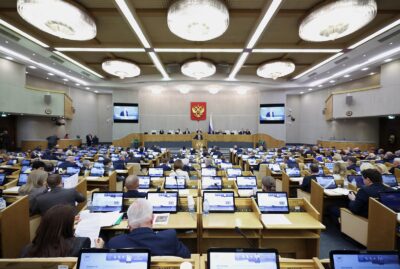
The Outlook for This Year’s Elections to the State Duma in Russia

In September 2026, elections to the State Duma—the lower chamber of the Federal Assembly—will take place in the Russian Federation. Although Russia’s system of power is built primarily around the prerogatives and authority of the president, the Duma remains one of the most important institutions of this formally democratic federation. Over more than two and a half decades of...

More →

Baltic Team

IEŚ Commentaries 1516
30 January 2026

Where Is the Center of the Belarusian Opposition Today? The Relocation of Sviatlana Tsikhanouskaya’s Office

Since the 2020 presidential election, Belarusian opposition leader Sviatlana Tsikhanouskaya has resided in Lithuania due to fears of political repression in Belarus. In mid-January 2026, she announced that she and her office would relocate to Warsaw. The main reason for this decision was the Lithuanian authorities’ decision to downgrade Tsikhanouskaya’s protective status,...

More →

Baltic Team

IEŚ Commentaries 1515
28 January 2026
Jakub Bornio - Baltic Team

The United States National Defense Strategy and the Security of Central and Eastern Europe

The United States National Defense Strategy, published by the Department of War, operationalises and further specifies the assumptions of U.S. foreign policy articulated in the National Security Strategy. The Pentagon’s vision of the international environment assumes that U.S. policy will be guided by a doctrine of “practical realism”, the prioritisation of the Indo-Pacific...

More →

Collective Memory Team

IEŚ Commentaries 1514
28 January 2026
Agata Tatarenko - Collective Memory Team

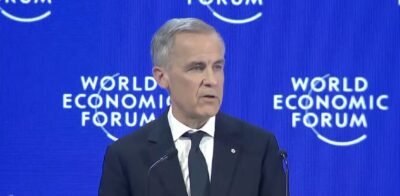
The Powerless in Davos: Central European Motifs in Mark Carney’s Speech

The speech delivered by Canadian Prime Minister Mark Carney at the Davos forum offered a contemporary interpretation of Václav Havel’s thought, particularly as articulated in the essay The Power of the Powerless. In diagnosing changes in the global order, Carney drew on Havel’s critique of life lived in pretense and conformity. From this perspective, the Canadian prime...

More →

Baltic Team

IEŚ Commentaries 1513
28 January 2026
Michał Paszkowski - Baltic Team

The Central European Natural Gas Market in 2026

The Central European natural gas market will play a crucial role in ensuring the region’s overall energy security in 2026. Following the supply shock triggered by Russia’s full‑scale invasion of Ukraine in 2022, countries in the region have gradually adapted their supply models to the new geopolitical realities. A key element of this transformation has been liquefied natural...

More →

Historical narrative and applied history team

IEŚ Commentaries 1510
26 January 2026
Jędrzej Piekara - Historical narrative and applied history team

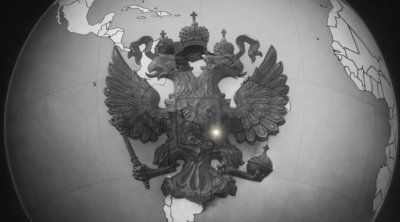
Russian-Venezuelan Relations as a Factor in Russian Geopolitics[1]

In the decade after the Soviet collapse, Moscow’s room to manoeuvre in Latin America and the Caribbean was limited due to the scarcity of resources and reorientation of Russian diplomacy towards the West, which naturally lowered the region’s strategic weight in Russian thinking. The turn came in the early 2000s as a re-entry organised around reciprocity in the United States...

More →

Baltic Team

IEŚ Commentaries 1509
26 January 2026

Small Languages, Big Models. Baltic States’ Strategies in the Fight for Digital Sovereignty in the Age of AI

The development of generative artificial intelligence depends on the quality and scale of the corpora on which models are trained. For countries with limited linguistic data resources in the digital space, low representation in global datasets poses a risk of technological marginalisation. To counter this threat, the Baltic states are implementing a range of strategies to...

More →

Collective Memory Team

IEŚ Commentaries 1508
22 January 2026
Robert Rajczyk - Collective Memory Team

Competition for right-wing voters in Hungary

The leader of the opposition party, Respect and Freedom (Tisztelet és Szabadság, TISZA), is trying to expand TISZA’s electorate appeal to far-right voters; Péter Magyar is formulating a demand for a ban on the entry of workers from outside the EU, starting from June 1, 2026, if he wins this April’s parliamentary elections. Furthermore, he is pretending to be a defender of...

More →

Baltic Team

IEŚ Commentaries 1506
22 January 2026
Michał Paszkowski - Baltic Team

Hungarian MOL Takes Over Russian Shares in Serbian Company NIS

The declaration of intent by Gazprom Neft to sell its shares in the Serbian company Naftna Industrija Srbije (NIS) to the Hungarian firm MOL[1] represents one of the most significant developments in the Central European fuel market in recent years. MOL’s entry in place of the Russian owner is expected to restore the operational continuity of the Pancevo refinery while...

More →

Collective Memory Team

IEŚ Commentaries 1500
15 January 2026
Agata Tatarenko - Collective Memory Team

From Historical Arguments to Cost Calculations: The Czech Public Debate on Russia’s War with Ukraine

The change of power in the Czech Republic did not lead to a fundamental shift in foreign policy toward Russia and the war in Ukraine; however, it clearly affected the way this policy has been legitimised in public debate. References to the historical experiences of 1938 and 1968 – which, after the annexation of Crimea and especially following Russia’s full-scale invasion of...

More →

Baltic Team

IEŚ Commentaries 1492
23 December 2025
Jakub Bornio - Baltic Team

The U.S. National Security Strategy and the Security of Central and Eastern Europe

The U.S. National Security Strategy, published by the administration of Donald Trump, is a fundamental document diagnosing changes in the international security environment and outlining the United States’ efforts to adapt to new geopolitical conditions. The Strategy’s assumptions are of key importance for the security of central and eastern European states, whose...

More →

European Integration and Conflict Team

IEŚ Commentaries 1486
16 December 2025
Spasimir Domaradzki - European Integration and Conflict Team

Bulgaria: The Resignation of Rosen Zhelyazkov’s Government. Society versus the Captured State

On 11 December 2025, the government of Rosen Zhelyazkov resigned. The decision followed the largest wave of social protests since 1989, which spread across the entire country. The immediate trigger for public opposition was the shape of the budget planned for the coming year. Following provocations directed at demonstrators by the leaders of GERB and DPS-NP—Boyko Borisov and...

More →

Civic Studies Team

IEŚ Commentaries 1485
10 December 2025
Szczepan Czarnecki - Civic Studies Team

Czech Republic: Government Formation in Czechia and the Prospect of a Vote of Confidence

The process of forming a new government following ANO’s electoral victory has been marked by both considerable momentum and clear political tensions. According to statements by the Speaker of the Chamber of Deputies, Tomio Okamura (SPD), the cabinet formed by ANO, SPD, and the Motorists is expected to be appointed a few days after Andrej Babiš is sworn in as prime minister,...

More →

Civic Studies Team

IEŚ Commentaries 1481
29 November 2025
Jędrzej Jander - Civic Studies Team

The New Nationalities Policy Strategy of the Russian Federation: Deepening Securitization of Identity Issues

On 25 November 2025, the president of the Russian Federation, Vladimir Putin, signed Decree No. 858 approving a new nationalities policy strategy for Russia for the years 2026–2036. Compared with previous editions, the document contains provisions that point to an ongoing securitization of nationality issues within the Russian Federation. It may be treated both as a statement of...

More →

Historical narrative and applied history team

IEŚ Commentaries 1477
27 November 2025
Jędrzej Piekara - Historical narrative and applied history team

Basic Concepts of Russian Geopolitics After 2022: The Global Majority and Minority

To understand the fundamental concepts and assumptions shaping contemporary Russian geopolitics, it is necessary to examine not only official state documents but also quasi-encyclopedic and quasi-academic publications such as The New Diplomatic Dictionary, which outline the key ideological elements underpinning Russia’s vision of the international order.[1] The political...

More →

European Integration and Conflict Team

IEŚ Commentaries 1473
20 November 2025
Krzysztof Fedorowicz - European Integration and Conflict Team

Amendments to the Acts on Military Security and Defense of the Republic of Belarus

Following a series of legal changes in recent years concerning national defense, the security of the (Russia-Belarus) Union State, and Belarus’s national security concept, the government began amending all laws related to military security and defense at the end of 2025. The new regulations are intended to reflect the current geopolitical environment. They will also enable rapid...

More →

Collective Memory Team

IEŚ Commentaries 1462
4 November 2025
Agata Tatarenko - Collective Memory Team

Czechs and Independence Day: Between History and Citizenship

The celebrations of the Czechoslovak Independence Day, held in Prague on 28 October 2025 with the participation of President Petr Pavel and the highest state authorities, highlighted the significance of the First Czechoslovak Republic’s traditions for contemporary Czech identity. The ceremonies at Vítkov and Prague Castle, during which state decorations and general appointments...

More →

Baltic Team

IEŚ Commentaries 1461
3 November 2025
Jakub Bornio - Baltic Team

The “Estonianisation” of European Foreign Policy as a Challenge to NATO Cohesion

Recent Russian provocations directed against certain members of the North Atlantic Alliance have generated yet another axis of internal division within NATO. In this context, the Alliance faces a series of challenges in the sphere of strategic communication. The principal objective of NATO member states remains the mitigation of the adverse effects of such divisions on the...

More →

Eastern Team

IEŚ Commentaries 1423
1 September 2025
Hanna Bazhenova - Eastern Team

Changes on Ukraine’s Historical Front: The Law on State Policy of National Memory

Russia’s full-scale invasion prompted the Ukrainian authorities to rethink their national memory politics. The most recent innovation was the adoption on 21 August 2025 of the law on state policy in the field of national memory, which defines, in particular, the purpose, main principles, tasks, and legal foundations of this policy, as well as its subjects and their powers. The...

More →

Baltic Team

Komentarze IEŚ 1422
31 August 2025
Damian Szacawa - Baltic Team

Poland’s Presidency of the Council of the Baltic Sea States

On 1 July 2025, Poland assumed its fourth annual presidency of the Council of the Baltic Sea States (CBSS). The Polish chairmanship, which was taken over from Estonia, will last until 30 June 2026 and will be determined by the evolution of the CBSS’s role in addressing fundamental security challenges in the Baltic Sea Region, resulting from Russia’s aggression against Ukraine...

More →

Baltic Team

IEŚ Commentaries 1415
20 August 2025
Jakub Bornio - Baltic Team

Diplomatic Manoeuvring over the Question of ‘Peace’ in Ukraine: The Trump–Putin and Trump–Zelensky Meetings

In August 2025, diplomatic efforts towards achieving a ‘peace agreement’ in Ukraine intensified. In the days following a remote meeting between European leaders and Donald Trump, a summit was held in Alaska between the US and Russian presidents. This was followed by a meeting in Washington between the US and Ukrainian presidents, with the participation of European leaders....

More →

Baltic Team

IEŚ Commentaries 1414
20 August 2025

The Baltic States and the Israeli–Palestinian Issue

France, the United Kingdom, and Canada have announced that they will decide on the recognition of Palestine as an independent state at the next session of the UN General Assembly. The Baltic states do not currently anticipate a similar step. Meanwhile, as the international community intensifies its calls for a ceasefire in the Gaza Strip, Israel’s representatives are actively...

More →